

During my medical internship in Bangalore, I often noticed the daughter of the cook in the hospital canteen. She would sit in a corner after school, her notebooks stained with the smell of spices. On the rare occasions when we spoke, her eyes would light up as she described her dream of becoming a doctor. It seemed improbable though, her family’s modest means, the weight of social expectations, and the sheer scarcity of opportunity stacked against her.
But the extraordinary happened: her father encouraged her ambitions, the hospital leadership rallied behind her, and alumni scholarships opened doors that might otherwise have remained closed. Years later, she walked into the medical college as the first doctor in her family. Her journey reflects, in microcosm, the transformation we need at scale: moving women from being part of a “pipeline” of talent to becoming powerhouses of innovation and leadership.
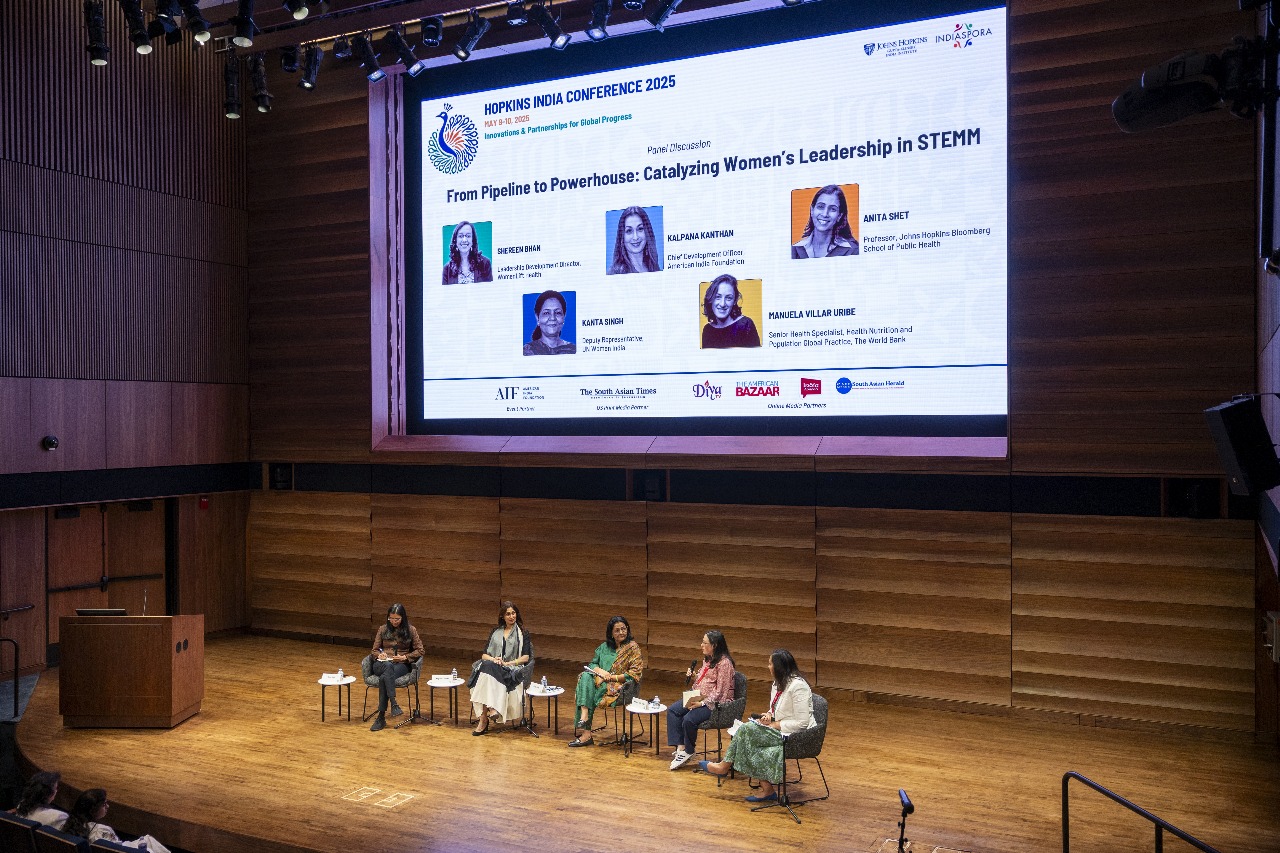

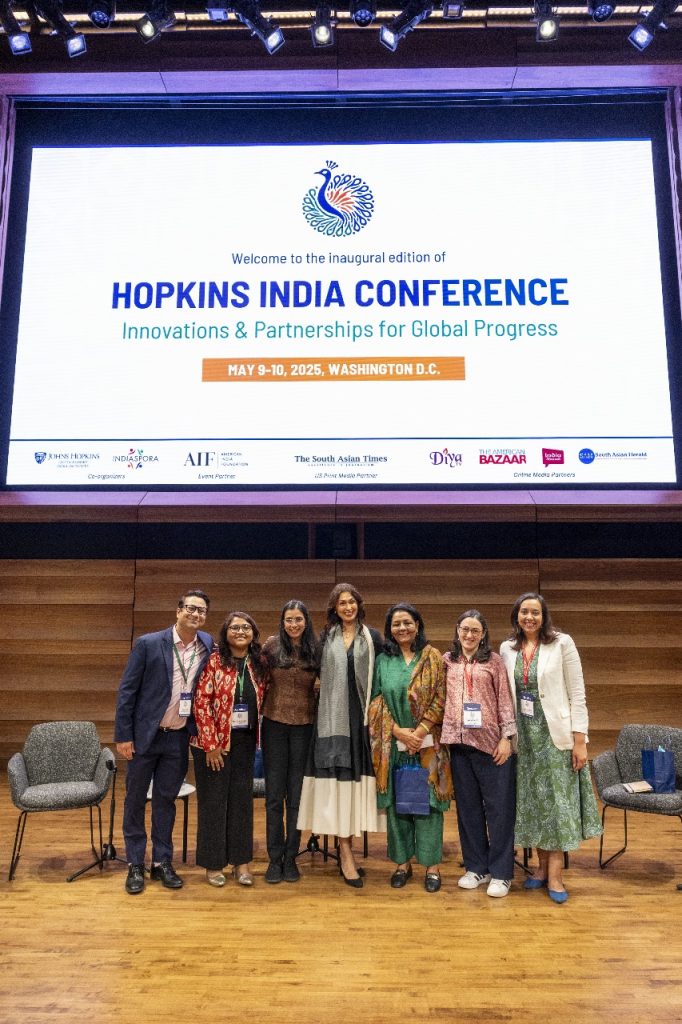
At 2025’s Hopkins India Conference, I chaired a closing panel titled From Pipeline to Powerhouse: Catalyzing Women’s Leadership in STEMM. It convened four formidable leaders, Kanta Singh (UN Women India), Shereen Bhan (WomenLift Health), Kalpana Kanthan (American India Foundation), and Manuela Villar Uribe (World Bank), to reflect on what it truly takes to create equitable systems in science and technology. What emerged was not a perfunctory conversation about numbers or token representation, but a deeper excavation of the barriers that continue to shape and often constrain women’s experiences in STEMM. Midway through the panel, I posed a simple question to the audience of academics, industry leaders, students, and policy professionals: How many of you have been the only woman in a professional room? Hands rose across the hall. That simple moment captured the very systemic issue we are trying to solve.

I was struck by the clarity of voices calling for more than mere representation. We were reminded that safety at home, in public spaces, in workplaces, and increasingly online, remains one of the most persistent barriers to women’s empowerment. Equally resonant was the recognition that empowerment requires financial independence and the courage to risk failure and recovery. We talked about the catalytic role of mentorship and male allyship. Genuine change requires everyone, including men, to challenge ingrained biases, both within workplaces and within families. Yet women continue to shoulder disproportionate caregiving responsibilities and remain systematically excluded from the leadership circles where funding priorities are determined. Agency, as the panelists emphasized, is not bestowed overnight. It demands institutions reimagine their policies and embed gender sensitivity into the very architecture of their operations.
Writing this, I am reminded of why this work matters so deeply. Of how we need more ladders that will enable daughters to ascend from the smoky kitchens of subsistence into the luminous laboratories of discovery, carrying with them not just their own aspirations but the untapped genius of entire communities. Empowering women in STEMM is about reshaping the trajectory of science, technology, and humanity itself. So here is my call to action.
For individuals, the call is to pursue opportunities for leadership unapologetically and to extend the same encouragement to younger women who walk the path after you. Refuse to normalise gender stereotypes and practise every day acts of allyship — credit the originator of an idea when someone is talked over, invite new voices into familiar networks, and seek out mentors as much as you offer mentorship yourself. Small acts of resistance accumulate into cultural change.
For institutions, the responsibility lies in building structures that allow women to thrive without penalty. This means embedding gender-sensitive policies such as flexible working hours, comprehensive parental leave, and zero-tolerance enforcement of workplace harassment. It also means recruiting and retaining women in decision-making roles so that they can shape funding priorities and the future of science. Beyond policies, institutions must prepare the broader ecosystem — investing in exposure, skills, and career transitions, and ensuring that workplaces are truly ready to hire, train, and promote women.
There is a line from Shirley Chisholm that I often recall, about bringing a folding chair when a seat at the table is denied. Perhaps it is time to redesign the table, to build spaces where women are not the exception but the norm, not present by invitation but by right. For empowering women in STEMM goes beyond justice alone, it is about recalibrating the trajectory of the world. When women rise, they do not rise alone; they lift whole societies with them.