

India RISE

Blog

Blog

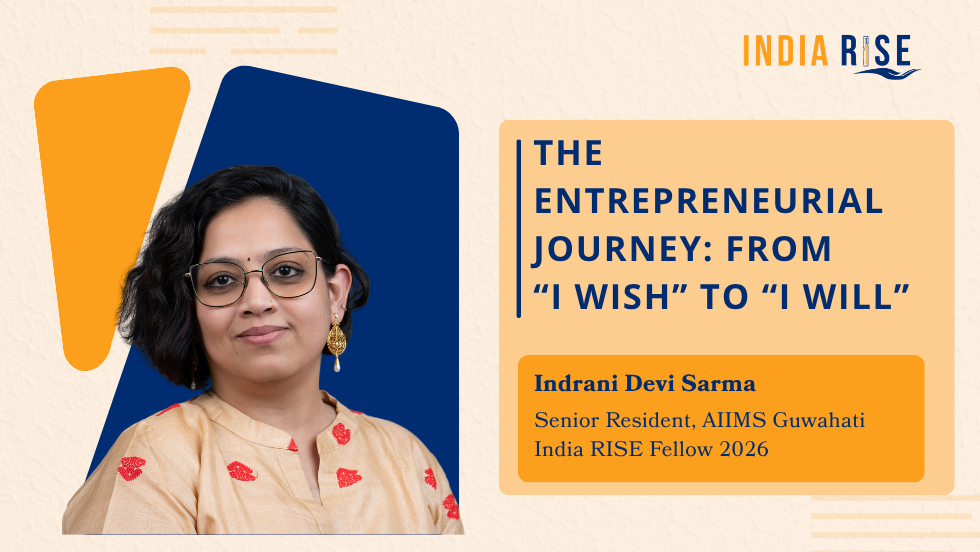
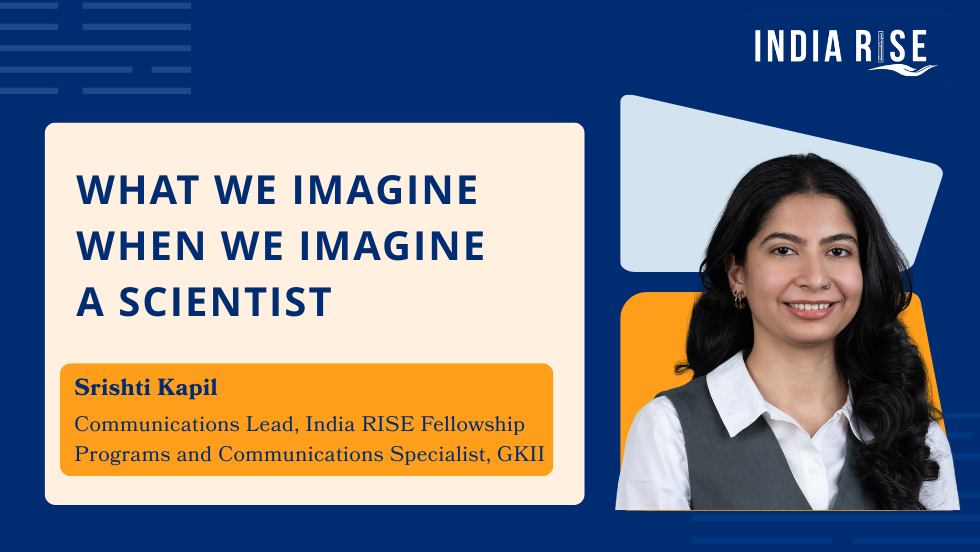
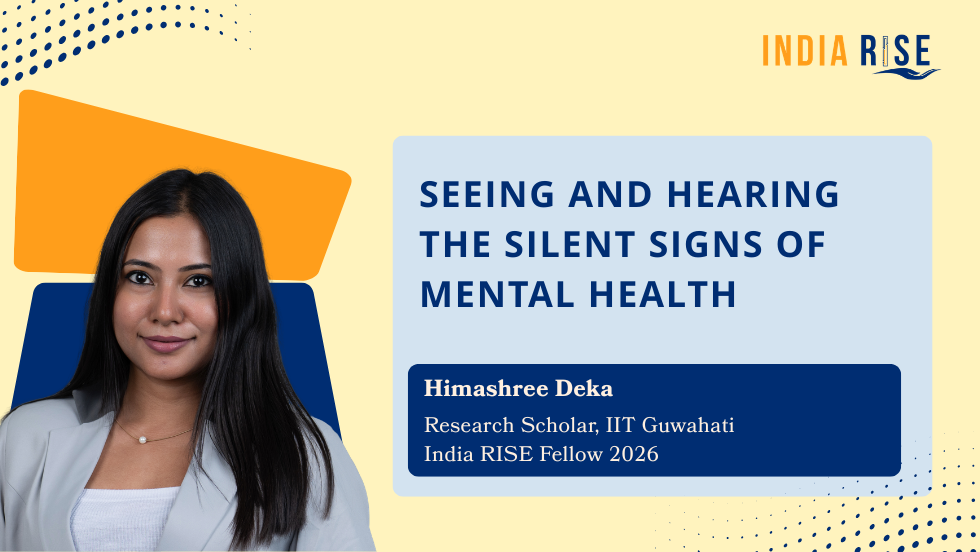
Seeing and Hearing the Silent Signs of Mental Health

By Himashri Deka, Research Scholar, Indian Institute of Technology (IIT), Guwahati and India RISE Fellow 2026 Could technology help identify signs of mental health challenges before they become severe? This question now sits at the centre of my research, but it was not where my engineering journey began. Like many engineering students in India, I initially viewed engineering through the familiar language of coding, circuits, systems, and technological innovation. Mental health seemed to belong elsewhere, usually to hospitals, counsellors, or specialists, and it was rarely discussed openly in academic spaces. Yet around me, I could see how stress, isolation, academic pressure, and emotional distress often remained unnamed until they had already begun to affect a person’s studies, relationships, or daily life. That perspective began to change during my time at IIT. Through discussions with my guide, Dr. Hanumant Singh Sekhawat, I was introduced to the idea that engineering and artificial intelligence could contribute to meaningful societal challenges. During one of our conversations, he gave me a copy of Psych 101 by Paul Kleinman. The book offers an accessible introduction to the fundamental concepts, theories, and experiments that have shaped psychology. By exploring how psychologists study human behaviour, cognition, emotions, and decision-making, it encouraged me to think beyond purely technical problems and appreciate the scientific understanding of human experience. Reading it broadened my perspective on how scientific inquiry can be applied not only to understanding the natural world, but also to addressing complex human and societal challenges. As our discussions continued, I began to look more closely at mental health as a problem of both care and access. In India, many people still delay seeking support because of stigma, lack of awareness, limited availability of trained professionals, cost, or uncertainty about where to begin. For students and young adults in particular, early signs of distress can be mistaken for ordinary pressure or hidden out of fear of being judged. This led me back to the question: could technology help identify signs of mental health challenges before they become severe? Today, my work focuses on developing AI-driven approaches for mental health awareness and early detection. Specifically, I study human behavioral signals, particularly eye movements and speech to identify patterns associated with mental health conditions. One area of my research explores eye-movement analysis for the early detection of schizophrenia. Eye movements are closely linked to cognitive processes and brain activity. The way individuals focus, shift attention, scan visual information, or track objects can reveal subtle behavioral markers. While these patterns may be difficult for humans to detect consistently, machine learning models can uncover meaningful signals that support early screening. Another focus of my research is speech-based depression detection. Human speech conveys far more than words alone. Variations in tone, energy, speaking rate, pauses, and vocal expression often reflect emotional and psychological states. Depression can subtly influence these characteristics, and AI techniques can help identify such changes through the analysis of voice recordings. What fascinates me most is that these indicators emerge from ordinary human behavior. We speak and move our eyes every day without conscious thought, yet these seemingly routine actions can reveal silent struggles that individuals may find difficult to express. The purpose of this research is not to replace doctors, psychologists, or therapists. Mental healthcare fundamentally depends on human empathy, professional expertise, and meaningful interpersonal support. Rather, I see AI as a complementary tool, one that can assist in early screening, raise awareness, and encourage timely intervention. Early detection is particularly important in mental health. Many individuals postpone seeking help because of stigma, limited awareness, or fear of being judged. By the time support is received, the condition may already have affected their academic performance, career, relationships, or overall quality of life. Technologies capable of identifying early warning signs could help bridge this gap and facilitate access to care at a much earlier stage. This potential is especially significant in India, where mental health resources remain limited relative to the size of the population and where support is often concentrated in urban or institutional settings. For someone who is unsure whether their distress is serious enough to seek help, or who does not have easy access to a counsellor or psychiatrist, AI-enabled screening tools could offer a first point of awareness. In the future, such tools may help make preliminary assessment more accessible, scalable, and affordable. Working in this field has also transformed my understanding of technology itself. Research is often measured through algorithms, accuracy metrics, and technical publications. Yet behind every dataset lies a human story. This perspective serves as a constant reminder that technology should not only be intelligent, but also responsible, ethical, and meaningful. My journey has shown me that engineering can create impact far beyond its traditional applications. By combining signal processing, machine learning, and data-driven analysis, I hope to contribute to a future where mental health conditions are detected earlier, understood more deeply, and discussed more openly. Sometimes the signs are visible in the movement of the eyes. Sometimes they are heard in the nuances of a voice. And sometimes, recognizing those signs early can be the first step toward healing. By Himashri Deka Research Scholar, Indian Institute of Technology (IIT), Guwahati and India RISE Fellow 2026

Blog

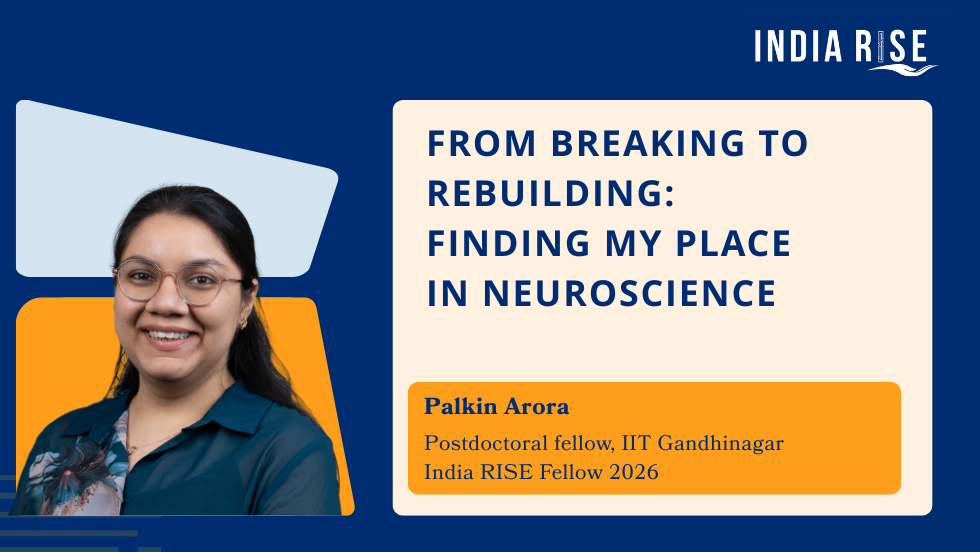
From Breaking to Rebuilding: Finding My Place in Neuroscience

By Palkin Arora, Postdoctoral fellow, IIT Gandhinagar and India RISE Fellow 2026 I did not begin my journey in research with the intention of becoming a neuroscientist. I wanted to be a clinician. That was the plan I held onto: clear, structured, and meaningful. When I could not secure a clinical position, that certainty quietly gave way to uncertainty. What followed was not a bold pivot, but a direction I had not consciously chosen. I turned to biochemistry, telling myself that if I could not work directly with patients, I could at least stay close to the biology of disease. But very quickly, I found myself lost in it: pathways upon pathways, intricate but overwhelming. I remember sitting with pages of metabolic maps, thinking: this is important, but it feels distant, hard to connect to something human. For a while, I carried that quiet doubt, that maybe I had taken a path that did not quite fit. And then, one class changed everything. It was a neurobiology lecture where my professor paused midway and shared an email he had received. It was from a neighbour of a patient living with amyotrophic lateral sclerosis, or ALS. She wrote about how the patient’s involuntary movements were misunderstood by the community and how people mocked what they did not understand. She wrote about visiting doctors, about leaving without answers. Almost as an act of hope, she began reaching out to researchers. I do not remember the rest of that lecture. I remember sitting there, struck by something I had never fully grasped before: when healthcare systems reach their limits, people turn to research. Not as an abstract pursuit, but as a possibility, sometimes the only one left. Research no longer felt distant. It was not just about knowledge; it was about responsibility. That moment shifted something fundamental in me. Research no longer felt distant. It was not just about knowledge; it was about responsibility. With that shift, I moved towards neuroscience. Finding the Brain-Body Connection For my Master’s dissertation, I began studying microglia, the immune cells of the brain. The first time I saw them under the microscope, I remember pausing longer than necessary. They were not static structures; they seemed alive in a way I had not expected, constantly extending and retracting, quietly surveying their environment. I remember thinking: these cells are always watching, always responding. What fascinated me even more was what we began to observe: that inflammation in the body could activate these cells in the brain. The boundary I had once imagined between brain and body started to dissolve. The brain was not isolated; it was in constant conversation with the rest of the body. That idea stayed with me. Studying Injury, Disruption, and Recovery I carried this idea into my PhD, where I studied traumatic brain injury, or TBI. Here, the questions became more complex. What happens when the brain is disrupted? How does that disruption extend beyond neural circuits? What I found was that injury does not remain contained. A blow to the brain can ripple through the body, altering immune responses, metabolism, and overall physiological balance. The brain does not break alone; it takes the body with it. This work showed me what breakdown looks like, not as a single event, but as a gradual loss of coherence across systems. But somewhere in the middle of studying how the brain breaks, I found myself drawn to a different question. What does it mean for the brain to rebuild? This curiosity led me towards understanding resilience, large-scale brain networks, and eventually, meditation. If injury represents disruption, then practices like meditation offer a window into regulation: how the brain can reorganise, stabilise, and adapt in intentional ways. From disruption to regulation, from breakdown to rebuilding, the question remained the same, but the lens had shifted. At its core, my work now explores how the brain interacts with the body, and how these interactions shape our experience of the world. Navigating Research as an Early-Career Woman in STEMM Alongside this intellectual journey, there has been another, less visible layer to my experience in research. There were moments when progress felt uncertain, not because of a lack of effort, but because of delays, dependencies, and unclear timelines. Work that required acknowledgement would wait. Decisions would stretch out. And in those spaces, it was easy to begin questioning not just the system, but myself. These are not always the challenges we are trained to anticipate. They are subtle, often unspoken, yet deeply influential, especially for early-career researchers navigating complex institutional structures. For many women in STEMM, these experiences are not exceptions; they are patterns that shape how we move, persist, and sometimes hesitate within research spaces. Learning to navigate this has been its own form of training. An Evolving Relationship With Research My journey, in that sense, is still unfolding. From wanting to treat patients, to understanding molecules, to studying the brain in states of injury and recovery, I have come to see research not as a fixed path, but as an evolving relationship between questions, systems, and lived experience. And perhaps that is where I find myself now, not at a destination, but in a direction. A curious neuroscience researcher, trying to understand the brain, not only in how it breaks, but in how it rebuilds, adapts, and continues. Because sometimes, the most meaningful paths are not the ones we choose, but the ones that reshape how we choose to see. By Palkin Arora, Postdoctoral Fellow, Indian Institute of Technology (IIT), Gandhinagar and India RISE Fellow 2026

Blog

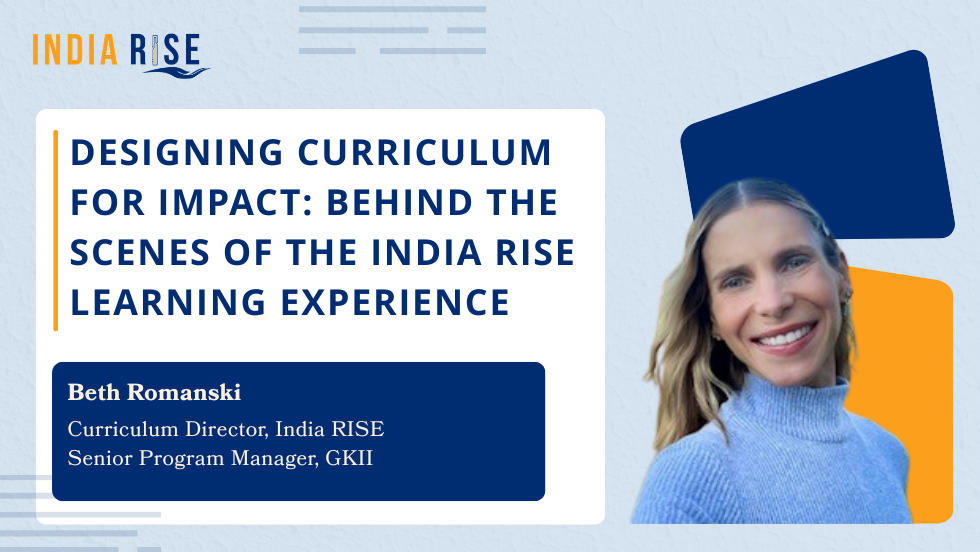
Designing Curriculum for Impact: Behind the Scenes of the India RISE Learning Experience

By Beth Romanski, Curriculum Director, India RISE and Senior Program Manager, Gupta-Klinsky India Institute From the earliest stages of envisioning the India RISE Fellowship, I was inspired by the opportunity to help build a large-scale educational initiative with meaningful impact. The vision was clear: to create a transformative, accessible, and empowering learning experience for early-career women STEMM researchers in India. The challenge was to translate that vision into a curriculum that was rigorous, relevant, and responsive to researchers working across disciplines, institutions, and regions. Building a Learning Journey For me, curriculum design has always been more than the organization of content. It is the careful construction of a learning journey. A strong curriculum asks what learners should be able to do by the end of an experience, what support will help them get there, and how a program can honor diverse backgrounds while maintaining high academic and professional standards. My approach began with listening. Over several months, our team reviewed insights from Indian institutions, industry partners, global STEMM programs, Johns Hopkins faculty, and women scientists at different stages of their careers. Most importantly, we listened closely to partners and prospective learners in India to ensure that what we were designing would make sense within their cultural, institutional, and professional contexts. These conversations reinforced a simple truth: meaningful professional growth requires more than technical expertise. Researchers also need mentorship, confidence, leadership development, institutional navigation skills, and a supportive professional community. This is especially true for early-career women researchers in Indian academic and research settings. Many are expected to excel in research while also carrying administrative, mentoring, or caregiving responsibilities. Others work in environments where access to senior mentors, international networks, or leadership training may be uneven. A curriculum designed for impact must recognize these realities and offer a learning experience that is both rigorous and practical. It must also create value beyond the fellowship year, giving fellows continued access to resources, networks, and skills they can return to as their careers evolve. Three Pillars: Research, Leadership, and Mentorship With this in mind, we designed the India RISE curriculum around three interconnected learning pillars: research, leadership, and mentorship. The research pathway supports fellows in strengthening advanced research and project management skills, including research ethics, proposal development, grant writing, scientific communication, stakeholder engagement, and translational research. The leadership pillar helps fellows build self-awareness, confidence, adaptive leadership practices, and strategic career plans. The mentorship pillar places guidance and peer learning at the center of the fellowship, connecting fellows with research advisors, program mentors, peer mentors, and coaching support. Each pathway is intentionally layered. Fellows are not simply receiving information. They are applying ideas to their own research trajectories, reflecting on their professional goals, and building a personalized roadmap for growth. One core tool is the Individual Development Plan, or IDP, which is tailored to each fellow and helps connect research ambitions with leadership development and mentorship needs. The experiential Capstone Project also gives fellows a way to apply each stage of the researcher journey in real time, creating immediate value for their own career trajectories, their institutions, and India’s broader research ecosystem. Designing for Outcomes and Access The curriculum is grounded in evidence-based adult learning theory, including competency-based education and backward design. Each module begins with clear learning outcomes and works backward to identify the activities, assessments, and resources needed to support mastery. In this model, outcomes matter more than time spent on any one activity. Accessibility was also a central priority. Having spent decades developing professional education, online learning, and micro-credential programs, I believe high-quality learning should meet learners where they are. For India RISE, this meant designing a flexible, hybrid experience that combines self-paced learning on JHU’s online learning platform, highly interactive live virtual workshops, reflective exercises, peer discussions, mentorship sessions, coaching, and in-person convenings. These formats are designed to fit together, accommodate different learning preferences, and maximize live sessions for skills application and peer engagement. This flexibility matters. India RISE fellows are researchers working in demanding institutional environments while balancing teaching, fieldwork, administrative duties, and personal commitments. A well-designed curriculum must respect that complexity while still creating momentum, shared progress, and honoring personal wellbeing. Our program competencies include resilient and adaptive leadership, and the curriculum supports fellows in building these skills for sustainable academic research careers. As motivation and incentive, fellows also have the opportunity to earn a Johns Hopkins verified micro-credential, helping them demonstrate their skills on CVs and digital profiles for career recognition and advancement. Mentorship as a Skillset My own experience with mentorship has shaped how I think about integrating it into the fellowship curriculum. Early in my career, a senior woman leader selected me as her mentee for a women’s leadership initiative. I had not yet built confidence in my professional path, but she saw potential in me before I fully saw it in myself. Since then, mentors, peers, supervisors, and male allies have helped me recognize my strengths and take the next step. Those experiences taught me that mentorship is not only about advice. It is about developing a mentorship skillset: knowing how to seek guidance, build trusted relationships, support peers, and eventually pay that support forward. India RISE embeds this through a triad mentorship model that includes dedicated India RISE Program Mentors, self-selected Technical Research Advisors, and both group and one-on-one mentoring formats. Together with peer engagement, coaching modules, and workshops, this model helps fellows grow not only as mentees, but also as future mentors within their own institutions. Leading From Wherever You Are Our approach to leadership development is also strengths-based. Through self-reflection, hands-on practice, and personalized coaching, fellows are encouraged to understand their values, voice, and vision. Tools such as strengths-based assessments help them identify how they lead, collaborate, and grow. The aim is to build self-awareness, efficacy, and agency, so fellows can lead from wherever they are. Developing the India RISE curriculum has been challenging, creative, and deeply meaningful. It has renewed my passion for thinking differently about integrated learning experiences

Blog

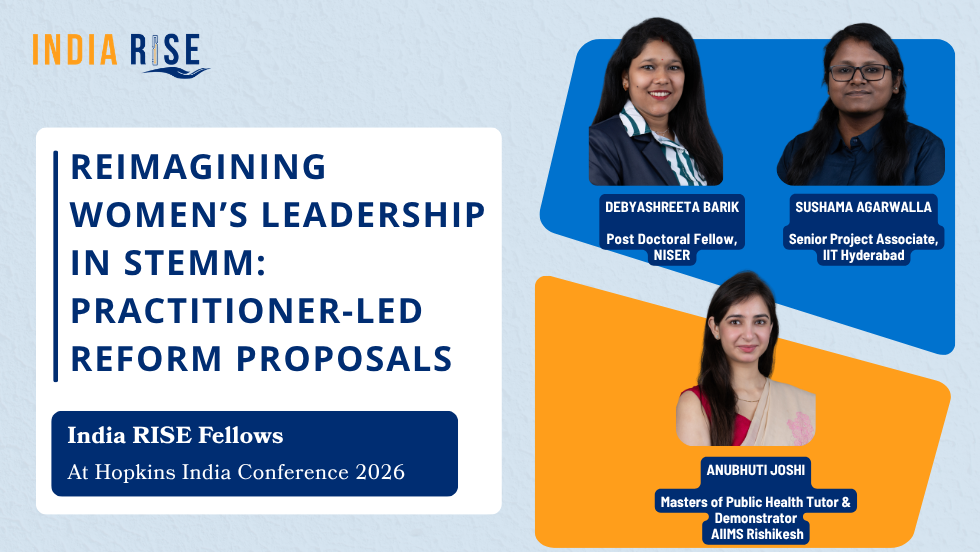
Reimagining Women’s Leadership in STEMM: Practitioner-Led Reform Proposals from India RISE Fellows

At the Hopkins India Conference 2026, the Gupta-Klinsky India Institute at Johns Hopkins University convened a roundtable titled “Reimagining Women’s Leadership in STEMM Research: Institutional Reforms That Work.” The discussion brought together senior voices from academia, policy, philanthropy, and global development to examine a persistent contradiction in India’s research ecosystem: while women’s participation in STEMM education has steadily increased, leadership within research institutions continues to remain disproportionately male. As part of the convening, the India RISE Fellowship invited fellows to submit practitioner-grounded institutional reform proposals based on their lived experiences within Indian research ecosystems. Selected fellows then presented their ideas directly to our panellists. What emerged was a powerful reminder that many of the barriers shaping women’s careers in STEMM are neither invisible nor inevitable. They are institutional. And importantly, they are reformable. Moving Beyond Mentorship Toward Sponsorship Across the presentations, one theme surfaced repeatedly: mentorship alone is insufficient without systems that actively create visibility and leadership opportunities for women researchers. Drawing from her experience within academic research environments, Dr. Sushama Agarwalla (IIT Hyderabad) argued that leadership progression often depends less on talent than on access to institutional networks, sponsorship, and nomination pathways that frequently remain informal and opaque. Her proposal focused on introducing structured sponsorship systems within institutions, where senior faculty and administrators would take explicit responsibility for recommending early- and mid-career women researchers for grants, committees, and leadership roles. She also proposed institutional dashboards to track women’s participation in leadership positions and decision-making structures over time. Similarly, Debyashreeta Barik, Ph.D., working in biotechnology and nanomedicine, highlighted the absence of formal mentorship and sponsorship pathways for women researchers navigating early career transitions. While informal mentoring relationships may exist, she noted that access often depends heavily on personal networks and institutional proximity. Her proposed reforms included structured mentorship programmes, leadership development support, and sponsorship mechanisms that would actively connect women researchers to collaborative projects, institutional committees, and funding opportunities. She also emphasised the need for re-entry pathways for researchers returning after caregiving-related career interruptions, including bridge funding, flexible promotion timelines, and temporary research support. Together, these proposals reflected a broader shift in the conversation around women in STEMM, from “fixing confidence gaps” to redesigning institutional systems that determine visibility, recognition, and advancement. The Invisible Labour Behind Academic Leadership In a particularly striking intervention, Anubhuti Joshi (AIIMS Rishikesh) examined what she described as the “hidden tax” placed on unmarried women researchers through a phenomenon known as singlism. Within many academic environments, she argued, unmarried women are often informally expected to absorb additional teaching, coordination, mentorship, and administrative responsibilities because they are perceived as more “available” than married colleagues. While these expectations rarely appear in formal policy, they accumulate over time in ways that directly affect research productivity, publication output, networking opportunities, and long-term leadership progression. To address this, Dr. Joshi proposed institutional workload transparency systems that would formally audit and track teaching loads, committee responsibilities, mentorship expectations, and administrative labour across departments. She also highlighted the growing precarity of contractual employment in Indian academia, where many women researchers remain excluded from long-term career pathways despite contributing substantially to institutional research output. Her proposed “contract-to-career-track” pathways aimed to create more stable leadership trajectories for high-performing contractual researchers through multi-year appointments, grant eligibility, and structured leadership development opportunities. From Individual Resilience to Institutional Design What made these presentations particularly compelling was their grounding in everyday institutional realities. Rather than framing gender inequity solely through individual experience, the fellows focused attention on how systems distribute opportunity, visibility, labour, and stability across academic life. The proposals also shared an important characteristic: practicality. None relied on abstract commitments to empowerment or representation. Instead, they centred on reforms institutions could realistically pilot within the next 12–24 months, from workload audits and sponsorship structures to re-entry pathways and expanded evaluation frameworks. At a moment when India is investing heavily in AI, biotechnology, public health, and advanced research ecosystems, the discussion reinforced a broader point emerging globally: scientific leadership pipelines are shaped as much by institutional design as by individual talent. The India RISE Fellowship hopes these conversations continue beyond a single convening and contribute to a growing ecosystem of institutions willing to experiment with measurable, accountable reforms that strengthen women’s leadership in STEMM research.

Blog

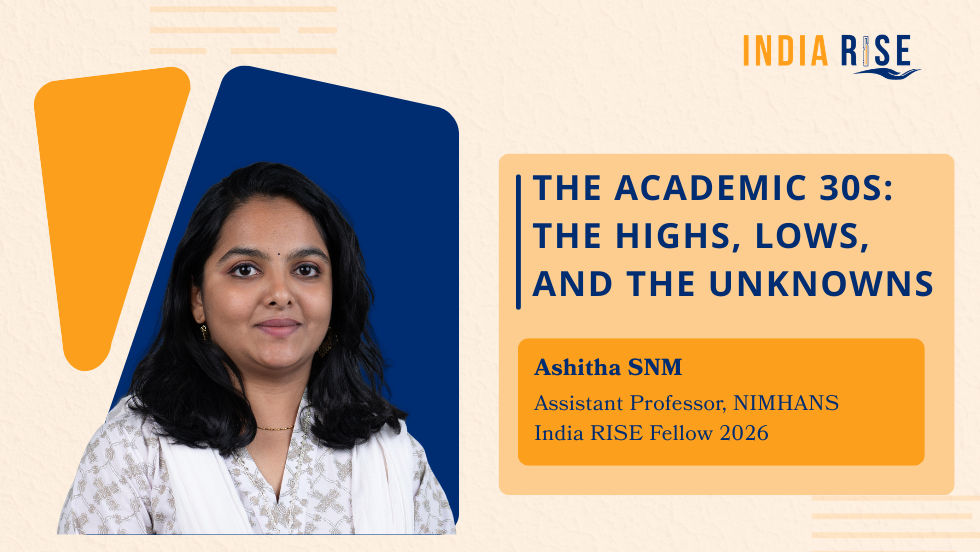
The academic 30s: The highs, lows, and the unknowns

This article was originally published by IndiaBioscience as part of its Journey of a Young Investigator (JOYI) 2026 series and has been cross-posted on the India RISE platform with permission. The original article can be accessed on the IndiaBioscience website. In this Journey of a Young Investigator (JOYI) 2026 article, Ashitha S N M, Assistant Professor, DST INSPIRE Faculty Fellow, Department of Psychiatry, NIMHANS, reflects on the uncertain decisions, quiet resilience, and unexpected mentorship that shaped her journey through academia. From navigating a lonely PhD and motherhood to building a research career, she shares honest lessons about persistence, imperfect choices, and finding strength in community while balancing personal life and scientific ambition. Decisions How can a twenty-year-old aspiring scientist be sure that ​‘this’ is the right decision and that it will ensure future success? I was naïve too. My journey as a researcher has been shaped as much by uncertainty as by perseverance.  With limited academic mentorship, many of my early decisions were instinctive rather than strategic. I chose courses out of curiosity, and when the ​“PhD bug” bit me, I accepted the first offer that came my way, without fully understanding what a PhD entailed. Nearly a year later, the weight of that decision set in. At 24, I felt intellectually isolated and unsure of an exit route, even though my guide was kind-hearted.  What followed became the most defining phase of my life. With minimal guidance, I learned to rely on myself. I immersed myself in my research topic, framed my own questions, designed experiments, and wrote manuscripts, all of which were accepted on first submission. That period shaped me. The loneliness of my doctoral years instilled self-reliance, resilience, and a quiet belief in myself and my work. Retrospectively, I realise that it was this experience that enabled me to design and defend my DST-INSPIRE Faculty Fellowship proposal with conviction and confidence and within a year of completing my PhD, I was awarded this highly competitive grant.  Although my doctoral journey was lonely, it instilled a deep belief that ​‘hard work pays’. Over time, one principle has stayed with me- take a decision and make it work. Those early lessons continue to anchor me. Find your clan A PhD is a hard-won battle, and no one can reach the top without support. I was fortunate. When I made choices that, in hindsight, were not ideal, mentorship arrived in unexpected ways. My senior, Raviraj VS, became the wind under my wings. Having faced similar challenges, he helped me navigate the difficult situation I found myself stuck in. It was all I needed to stay afloat, gather my strength and refocus on academic excellence.  The second such instance was when I found my ​‘girl gang’, not when younger, but in my thirties. These were women who consistently showed up for me, without agenda. Through them, I experienced the strength of sisterhood rooted in pure intentions, a genuine desire to support one another through thick and thin with mutual respect and genuine support. The bane and boon of the thirties The thirties can be a very demanding decade. It is when the safety-net of being ​‘young’ begins to fade and responsibilities intensify. Irrespective of gender, this is often the stage when personal commitments pile up, demanding attention just as professional expectations peak.  In Indian academia, this pressure is particularly acute. Age limits for fellowships, faculty positions, and travel grants begin to narrow options. The academic clock for finding a regular position ticks alongside personal milestones of finding a partner, getting married, followed by the responsibility of making the house a home. Uncertainty on both fronts takes away one’s focus and tests one’s composure.  Yet, I have to admit there is a certain charm in being in our thirties. Emotional maturity begins to ground ambition in realism.  This decade brings in the much-needed clarity that helps us declutter thoughts, identify and filter out distractions and judge better. The thirties become a period of introspection and re-assessment, one that equips us to navigate life’s curveballs with steadier resolve and prepares us for the tougher challenges of middle age. Homegrown academic by circumstance It was not only personal, but also professional realities that shaped my decision to forego a postdoctoral fellowship abroad. When one completes a PhD in one’s thirties and marries soon after, career decisions become collective rather than individual. Ageing parents, the need for job stability for both partners, and questions about how, when and where to raise a child all enter the equation. No amount of conversations prior to marriage and future planning can resolve these uncertainties. For me, prioritising family stability became the guiding choice. The timing of my PhD completion compounded this situation, as it coincided with the onset of the COVID-19 pandemic. For nearly two years, conferences were inaccessible, limiting opportunities to present my work, build networks, and engage with potential postdoctoral mentors. Cold emails became my primary mode of outreach, often with limited response. In retrospect, several factors were at play: the global crisis, laboratories focused on continuity, and my keen interest in transitioning from genetics to patient-derived stem-cell models of psychiatric disorders, an area in which I lacked hands-on experience. Now, as a principal investigator (PI) myself, I understand why such a major pivot may not always align with a hiring PI’s expectation from a postdoctoral candidate, who is required to be independent and take on mentorship responsibilities. Do I regret staying back? Absolutely not. I learned a lot more that extends well beyond what a conventional postdoctoral trajectory might have offered. I learned adaptability, persistence, and perseverance. More importantly, I gained a better understanding of Indian academia. I remain intentional about staying current and competitive ‑presenting my work at conferences and building meaningful international collaborations.  The journey reassures me that there is no single path to scientific growth, only paths shaped by commitment, adaptability, and purpose. Lessons from motherhood My parents and extended family — my greatest cheerleaders — patiently supported my decision to complete my PhD before marriage. I was in my early thirties when my baby was born, and to say that life changed would be an understatement. My brain changed. When I confidently told my very supportive mentor Meera Purushottam, that I would return from maternity leave and complete X, Y, and Z, she gently warned me, ​“your brain will split into two, and you will function at half capacity”. Only in hindsight do I understand the

Blog

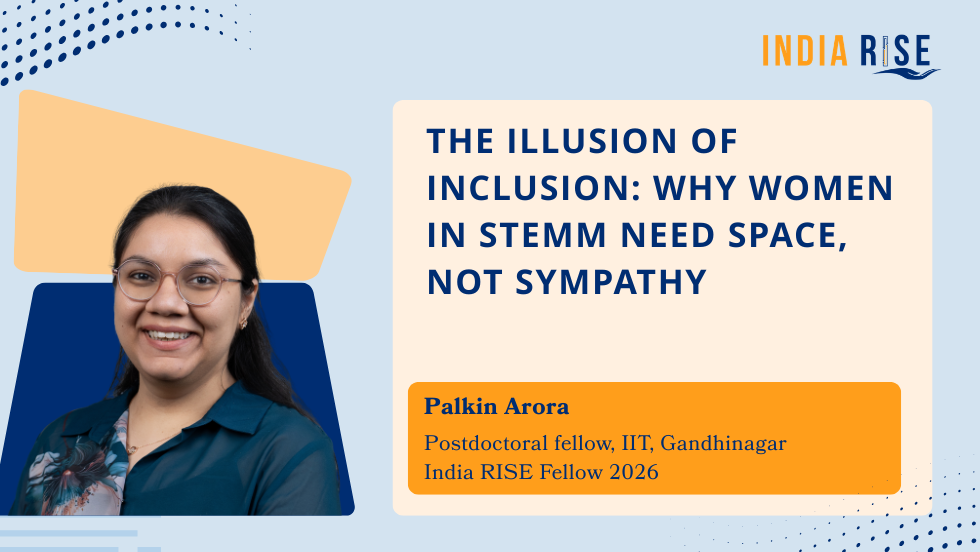
The Illusion of Inclusion: Why Women in STEMM Need Space, Not Sympathy

I remember sitting through yet another mandatory wellness seminar, watching a generic HR video on building resilience. As I looked around the room at my female colleagues who are brilliant researchers, yet visibly exhausted from juggling grant deadlines and heavy social expectations. It unsettled me and left me wondering, were we being asked to individually empower our way out of systemic failures? Because no amount of resilience training can fix structural exhaustion. Over the past decade, women’s participation in STEMM education in India has steadily increased. Yet their progression into leadership roles remains strikingly low. This gap suggests that the issue is not a lack of talent or ambition, but structural barriers embedded within academic institutions. Based on my observations within the Indian academic ecosystem, addressing these barriers requires moving beyond individual empowerment and toward institutional reform. Simply put, women in science don’t need sympathy; they need understanding and the institutional space to grow. I remember a colleague who returned to the lab just a few months after giving birth. She would slip out between experiments to take calls from home, checking if her child had eaten, if the fever had come down, if everything was okay. In meetings, she was as sharp as ever, presenting data, asking questions, holding her ground, but there was always a quiet urgency beneath it all. I think of another early-career researcher who once told me, almost apologetically, that she hadn’t been productive enough that month. She had been juggling teaching, grant writing, and family expectations, sleeping barely a few hours each night. Yet what stayed with her was not exhaustion, but guilt. In a culture where output is everything, burnout disguises itself as personal failure. The pressure is constant, but the support is minimal and often invisible. Then there are the CVs that carry silence. A year missing here, a gap there, time taken for caregiving, for health and for life. These pauses are rarely explained, yet they are quietly judged. What was necessary becomes what is questioned, and over time, these small penalties accumulate, shaping who moves forward and who is left behind. None of these stories are exceptional. They are, in fact, deeply ordinary. That is precisely the problem. Perhaps the issue is not the pause itself, but how little our systems understand what these pauses carry. Caregiving, recovery, and emotional strain are not deviations from a career, they are part of life within it. Yet instead of building structures that acknowledge this, institutions often respond with generic resilience trainings and one-size-fits-all wellness modules. If resilience must be built, it cannot be outsourced to HR videos alone. It must be embedded within the system itself through evaluation practices that recognize lived realities, and through cultures that are educated not just to support women, but to understand the weight they are already carrying. Providing mental health support systems that help women build resilience and give them confidence to move through life burdens. True progress in women’s leadership will not come from asking women to adapt to rigid institutional systems. It requires institutions willing to rethink how academic careers are structured and evaluated. By embedding gender literacy, strengthening meaningful mental health support, and normalizing career pauses, institutions can move from symbolic inclusion to genuine structural equity. Only then can the growing number of women entering STEMM translate into a new generation of scientific leaders. By Palkin Arora, Postdoctoral Fellow, Indian Institute of Technology (IIT), Gandhinagar and India RISE Fellow 2026

Blog

Transforming Childhood Worry into Engineering Solutions: My Journey into Biomedical Research

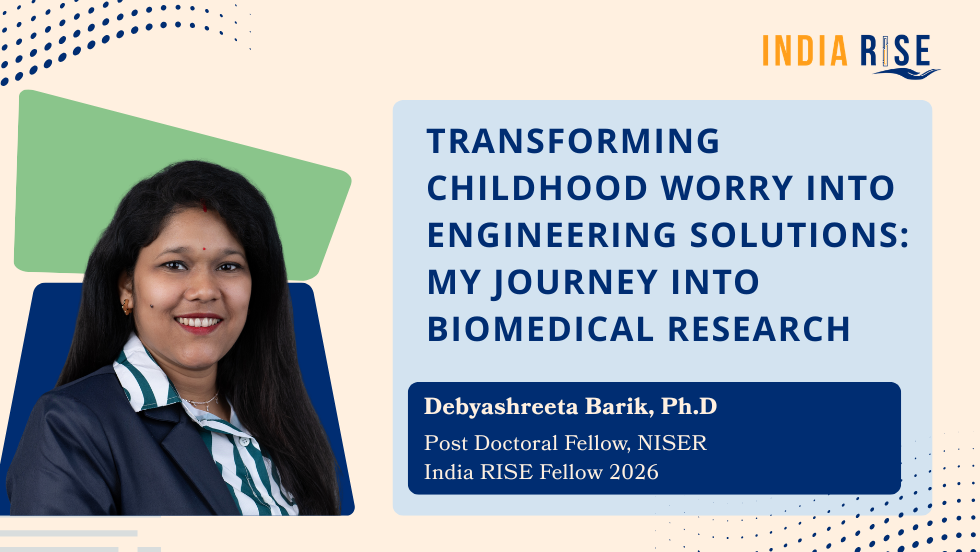
Some of my earliest memories of illness are not from hospitals, but from home. I remember watching my grandmother struggle to stand up because of severe joint pain. Simple movements that most of us take for granted like walking across the room or sitting comfortably, often caused her visible discomfort. Years later, my mother began facing similar problems when degenerative gaps developed in the joints of her backbone, leading to persistent pain and limited mobility. As a child, I could not understand the biological reasons behind these conditions. But I remember wondering why damaged bones and joints could not simply be repaired. Why couldn’t science restore tissues the way nature once built them? Those questions stayed with me and eventually shaped the path I chose in science. My academic journey began with a master’s degree in Life Sciences, where I developed a deeper understanding of how cells and tissues function. During this time, I became fascinated by regenerative medicine:the idea that biological systems could be supported or guided to repair themselves. This curiosity naturally drew me toward the field of bone tissue engineering, which focuses on developing strategies to repair or regenerate damaged bone. Motivated by this interest, I pursued a PhD in Biotechnology, where I worked on biomaterials designed to support tissue regeneration. Biomaterials are specially engineered substances that can interact with living tissues, often acting as scaffolds that help cells rebuild damaged structures. In bone tissue engineering, scientists design structures that mimic the natural environment surrounding cells, allowing them to grow and rebuild damaged tissues. Working in this field was deeply meaningful to me. It felt like the scientific questions I was exploring were connected to real-life problems I had witnessed growing up. The possibility that biomaterials could one day help repair skeletal damage made the research feel personal as well as purposeful. One of the most exciting aspects of this work was its interdisciplinary nature. Bone tissue engineering lies at the intersection of biology, chemistry, and materials science. Each discipline contributes tools and ideas that together make innovative solutions possible. This experience taught me that solving complex health problems often requires collaboration across multiple scientific fields. As my research progressed, I became increasingly curious about another rapidly growing area of biomedical science-nanotechnology. While regenerative biomaterials focus on rebuilding tissues, nanotechnology offers new ways to deliver treatments more precisely inside the body. These tiny engineered systems, thousands of times smaller than the width of a human hair, can interact with cells and tissues in highly controlled ways. This curiosity led me to transition toward nanomedicine during my postdoctoral research. Today, I work on developing nanoparticle-based therapeutic systems aimed at improving targeted treatment strategies for diseases such as cancer. By designing nanoscale carriers for drugs, researchers hope to deliver treatments more efficiently to diseased cells while reducing damage to healthy tissues. Although my research focus has evolved from bone tissue engineering to cancer nanotechnology, the underlying motivation remains the same. I am interested in designing biomaterial-based systems that can interact with the body in ways that improve healing and treatment outcomes. Along the way, I have also experienced some of the challenges that many early-career scientists face. Building a research career requires persistence, adaptability, and support systems. For women in science, these challenges are sometimes amplified by limited mentorship opportunities or structural barriers within research environments. My experience as an India RISE Fellow, although still at an early stage, has already been very meaningful. One of the most valuable aspects of the fellowship has been the opportunity to connect with other early-career women researchers. Engaging with peers who share similar aspirations and challenges has created a supportive environment where ideas, experiences, and encouragement can be exchanged openly. The mentorship network has also been particularly impactful. Learning from experienced mentors provides valuable guidance on navigating research careers, leadership development, and balancing professional growth with personal goals. These interactions help build confidence and offer practical insights into overcoming challenges that women scientists often encounter. Through this experience so far, I have learned the importance of building strong professional networks and supporting one another within the scientific community. Initiatives like the India RISE Fellowship create spaces where women scientists can share their experiences, gain guidance, and grow both personally and professionally. One of the most valuable lessons my research journey has taught me is resilience. Scientific progress rarely follows a straight path. Experiments fail, ideas evolve, and unexpected challenges emerge. Yet each obstacle also offers an opportunity to learn and refine our understanding. Whenever research becomes difficult, I often think back to the experiences that first motivated me—the struggles of my grandmother and mother with skeletal disorders. Those memories remind me that scientific research is ultimately about people and the problems that affect their lives. Looking ahead, I believe that the future of biomedical innovation lies in interdisciplinary collaboration. Fields such as biomaterials science, nanotechnology, and molecular biology are increasingly converging to develop therapies that were once unimaginable. Reflecting on my own journey—from a worried child observing joint disease at home to a researcher working at the intersection of biotechnology and nanomedicine—I realize that personal experiences often shape the questions scientists choose to pursue. For me, science is not only about discovery. It is about transforming curiosity into solutions that may one day improve the lives of others.

Blog

Gender Equity in India’s Workplaces: Why Strong Laws Have Not Translated into Equal Outcomes

India is often described as a country with a robust legal framework for gender equality at work. Constitutional guarantees, maternity benefits, workplace safety laws, and equal pay provisions together suggest a strong commitment to women’s rights in the labour market. Yet, when measured by outcomes rather than intent, India continues to perform poorly on women’s participation, leadership, and economic power. This gap between policy design and lived reality points to a deeper challenge: gender equity in India has been treated largely as a matter of legal compliance, rather than as a problem of institutional design and accountability. To understand why progress has stalled, it is necessary to examine where India truly stands today not just in terms of participation numbers, but in the quality of work and access to leadership that women experience. Where India Stands Today: Participation Without Power India’s Female Labour Force Participation Rate (FLFPR) has seen a notable rise in recent years, reversing a long period of decline. Data from the Periodic Labour Force Survey indicates that FLFPR increased from 23.3 percent in 2017–18 to about 41.7 percent in 2023–24, with some estimates placing participation in the range of 32 to 42 percent depending on measurement methods. At first glance, this appears to be a long-awaited turning point for women’s economic participation in India. However, the nature of this increase complicates the narrative. Much of the recent growth has been driven by rural women entering self-employment, particularly in agriculture. This shift is widely understood as distress-driven participation, reflecting economic necessity rather than the expansion of decent, productive employment opportunities. Many women have entered low-paying, informal, and insecure work as household incomes came under pressure. Participation has increased, but the quality and stability of work remain deeply uneven. The gender gap also remains substantial. Male labour force participation continues to hover around 77 percent, underscoring how far India still lags both its own male workforce and global comparators. Analyses by the World Bank Group consistently show that India’s female participation remains well below that of middle-income countries, despite recent gains. Formal employment among women has grown, as reflected in rising female enrolment in provident fund systems, but this growth is concentrated in specific sectors and regions, leaving large sections of women outside stable, formal employment. Structural barriers continue to shape these outcomes. Women shoulder a disproportionate share of unpaid care and domestic work, limiting their ability to access full-time or higher-quality employment, particularly in urban labour markets. Cultural norms around marriage, caregiving, and women’s mobility further restrict opportunities, even for educated women. The result is a labour market where women’s participation is rising, but meaningful choice, security, and advancement remain constrained. These structural weaknesses become even more pronounced when one examines women’s representation in research, development, and leadership roles. India produces one of the highest proportions of women STEM graduates globally, yet women account for only about 14 to 18 percent of scientists and professors in leading academic and research institutions. In decision-making spaces whether universities, laboratories, corporate boards, or innovation ecosystems women remain markedly underrepresented. The challenge, therefore, is not a lack of talent, but the systematic filtering out of women as careers progress. The Leaky Pipeline from Education to Leadership India’s gender gap is often described as a “leaky pipeline,” and nowhere is this more evident than in the transition from education to leadership. Women enter higher education and early-career roles in significant numbers, but their presence declines sharply at mid-career and senior levels. This attrition is rarely driven by lack of ambition or ability. Instead, women encounter cumulative institutional barriers: opaque promotion systems, workplace cultures that penalize caregiving, inadequate safety and mobility support, and the absence of women in senior decision-making roles. Short-term interventions such as fellowships and re-entry schemes have helped individual women remain in the system, but they have not altered the structures that govern hiring, promotion, and leadership selection. As a result, women remain clustered in junior roles while senior positions continue to be dominated by men. Without structural reform, the pipeline continues to leak at every stage. India’s Policy Architecture for Gender Equality: Ambitious and Expansive India’s gender equity framework rests on a strong constitutional foundation. Articles 14, 15, and 16 of the Constitution guarantee equality before the law, prohibit discrimination on the basis of sex, and ensure equal opportunity in public employment. These principles are reinforced through a series of landmark legislations that address both public and private spheres of women’s lives. The Protection of Women from Domestic Violence Act (2005) recognizes physical, emotional, sexual, and economic abuse, extending legal protection beyond narrowly defined notions of violence. The Sexual Harassment of Women at Workplace (Prevention, Prohibition and Redressal) Act (2013) mandates safe working environments across public and private sectors, formally acknowledging that women’s participation depends on dignity and safety at work. The Maternity Benefit (Amendment) Act (2017) expanded paid maternity leave, signaling state recognition of reproductive labour. Alongside legal protection, the government has launched a range of schemes aimed at empowerment and economic inclusion. Beti Bachao Beti Padhao sought to address declining child sex ratios while promoting girls’ education. Programs such as the Rashtriya Mahila Kosh and Mahila Shakti Kendra have focused on micro-credit, skills, and livelihood support, particularly for rural women. Maternity-linked income support through the Pradhan Mantri Matru Vandana Yojana and childcare support under the National Crèche Scheme were designed to ease the care burden that often forces women out of the workforce. Political representation has also been a key lever. The 73rd and 74th Constitutional Amendments mandated 33 percent reservation for women in Panchayats and Urban Local Bodies, dramatically increasing women’s presence in local governance. More recently, the Women’s Reservation Bill passed in 2023 promises 33 percent reservation in Parliament and State Assemblies, signaling renewed political intent, even as implementation remains pending. Complementing these efforts are gender budgeting initiatives and the National Policy for Empowerment of Women (2001), both of which aim to mainstream gender considerations across state action rather than isolate them within women-specific departments.

Blog

Representation Begets Participation: My Journey from IIT to Building Pathways for Women in STEMM

Growing up in Jamshedpur, the Mecca of steelmaking, life felt like a level playing field. I had short hair, raced the boys on the track, believed that nothing could stop me from excelling in academic, sports or public speaking. Some may say, I was very competitive, but I was merely mimicking those who were allowed to stay outdoors, who wore bruised knees as badges of honor, clinking medals adorned on sun-tanned skin and had calf muscles to die for. I learnt that with skill and hard work, I could achieve pretty much anything. My parents were progressive enough to think that becoming a metallurgical engineer made perfect sense for their daughter. After all, in a city built on steel, what better future than one forged in it? But I soon discovered that it takes more than skills and effort to thrive in college or at work. A Minority in the Halls of Merit When I entered IIT, I was one of just 34 girls in a batch of nearly 700 students. At least Metallurgy was better than Mechanical Engineering that year, which had one woman “holding the fort.” In classrooms and labs, the ratio was not just a number; it defined how you were seen, spoken to, and sometimes, how much you spoke. Unlike students in the social sciences, we were never taught or trained to have the vocabulary to articulate what it meant to live and learn in a gendered world. When you’re five percent of the class, you’re both visible and invisible, grateful to be there, but aware that your every move is amplified. As in any society where norms are set by the majority, we were learning how to adapt where the boys were the norm. Each one of my female classmates went above and beyond to excel. We dressed for utility, adopted the “tough engineer” persona, that became our silent uniforms of belonging. Acceptance came in many forms: blending in, toughening up, or occasionally, opting out. We were respected for having made it, yes, but were also pedestalized. We were also envied for being preferentially treated. Because the other 3 secretaries of the electronics club thought that one female secretary had an easy interview because of her gender.  Sisterhood and Silent Struggles The girls’ hostel became our safe haven. As hostel president, I witnessed both the quiet strength and the hidden struggles that often went unseen. Academic pressure combined with the emotional turbulence of adolescence was no small weight to carry. Some students were dealing with personal losses, health challenges, or questions of identity all while meeting the relentless demands of IIT life. Some couldn’t take it. A few are no longer with us. It remains a sobering reminder that meritocratic spaces often overlook the human need for care, empathy, and mental health support. But there was also camaraderie, shared laughter during late-night errands to the canteen, whispered confessions before exams, collective pride when one of us topped a course or aced a project. Those years taught me that community is not just a comfort, it’s a survival strategy. Policy as a Catalyst for Change Much has changed since those days. IITs now have a quota ensuring at least 20 percent of seats for women. It’s a transformative policy, one that not only opens doors but also shifts mindsets of families, schools, and society. When parents see a higher probability of success, they’re more likely to encourage daughters to try. Policies like these challenge self-limiting beliefs. They show that representation doesn’t dilute merit, it expands it. Academia, after all, stands at the crucial intersection of society and workforce. If universities can normalize women’s presence in scientific spaces, industries will have no excuse to say “we couldn’t find qualified women.” From Classrooms to the Oilfields After graduation, I carried those lessons into the oil and gas sector, an environment even more skewed. My first year as an oilfield engineer was spent across remote rigs where I was often the only woman. Field life was a test of endurance. Water shortages made menstruation management a daily logistical challenge. Safety meant guarding against occupational hazards, not harassment; the idea of “women’s safety” simply didn’t make the checklist. The technicians and engineers I worked with respected skill above all. Once they saw I could troubleshoot and handle a shift, I was one of them. Still, it was clear that these workplaces weren’t designed for women, they merely accommodated us. The design of the jumpsuits, no separate facilities for women and the shifts & systems have barely ever anticipated the needs of a working mother. Minority barely determined the policy for the majority. I wish like politics, even workplaces saw us as a vote bank. That experience cemented my belief that inclusion cannot depend on individual resilience, it must be engineered into the system. From Personal Lessons to Institutional Change Years later, when I joined Johns Hopkins University’s Gupta-Klinsky India Institute (GKII), the questions I carried from IIT and the oilfields resurfaced:Why are there so few women leading scientific research in India? What would it take to change that pipeline not just at entry, but through leadership? These reflections led to the creation of the India RISE Fellowship a flagship initiative that I now lead. RISE (Research, Innovation, Science, and Empowerment) is designed to strengthen the leadership, research capacity, and visibility of early-career Indian women in STEMM. It connects fellows with senior mentors from India and the U.S., equips them with leadership training, and creates networks for global collaboration. Through RISE, I see how policies, mentorship, and representation can together transform trajectories. Each fellow’s journey reaffirms what I witnessed years ago: women don’t lack capability they lack systemic support. The Road Ahead Representation begets participation. But participation alone isn’t enough. We need persistence and progression. Academia must continue to be the laboratory where gender equity is not just researched but practiced. We have made progress in classrooms; now the challenge lies in ensuring those women enter and stay in the

From Pipeline to Powerhouse Why Women in STEMM Will Change the World
Blog

From Pipeline to Powerhouse: Why Women in STEMM Will Change the World 

During my medical internship in Bangalore, I often noticed the daughter of the cook in the hospital canteen. She would sit in a corner after school, her notebooks stained with the smell of spices. On the rare occasions when we spoke, her eyes would light up as she described her dream of becoming a doctor. It seemed improbable though, her family’s modest means, the weight of social expectations, and the sheer scarcity of opportunity stacked against her. But the extraordinary happened: her father encouraged her ambitions, the hospital leadership rallied behind her, and alumni scholarships opened doors that might otherwise have remained closed. Years later, she walked into the medical college as the first doctor in her family. Her journey reflects, in microcosm, the transformation we need at scale: moving women from being part of a “pipeline” of talent to becoming powerhouses of innovation and leadership. At 2025’s Hopkins India Conference, I chaired a closing panel titled From Pipeline to Powerhouse: Catalyzing Women’s Leadership in STEMM. It convened four formidable leaders, Kanta Singh (UN Women India), Shereen Bhan (WomenLift Health), Kalpana Kanthan (American India Foundation), and Manuela Villar Uribe (World Bank), to reflect on what it truly takes to create equitable systems in science and technology. What emerged was not a perfunctory conversation about numbers or token representation, but a deeper excavation of the barriers that continue to shape and often constrain women’s experiences in STEMM. Midway through the panel, I posed a simple question to the audience of academics, industry leaders, students, and policy professionals: How many of you have been the only woman in a professional room? Hands rose across the hall. That simple moment captured the very systemic issue we are trying to solve. I was struck by the clarity of voices calling for more than mere representation. We were reminded that safety at home, in public spaces, in workplaces, and increasingly online, remains one of the most persistent barriers to women’s empowerment. Equally resonant was the recognition that empowerment requires financial independence and the courage to risk failure and recovery. We talked about the catalytic role of mentorship and male allyship. Genuine change requires everyone, including men, to challenge ingrained biases, both within workplaces and within families. Yet women continue to shoulder disproportionate caregiving responsibilities and remain systematically excluded from the leadership circles where funding priorities are determined. Agency, as the panelists emphasized, is not bestowed overnight. It demands institutions reimagine their policies and embed gender sensitivity into the very architecture of their operations. Writing this, I am reminded of why this work matters so deeply. Of how we need more ladders that will enable daughters to ascend from the smoky kitchens of subsistence into the luminous laboratories of discovery, carrying with them not just their own aspirations but the untapped genius of entire communities. Empowering women in STEMM is about reshaping the trajectory of science, technology, and humanity itself. So here is my call to action. For individuals, the call is to pursue opportunities for leadership unapologetically and to extend the same encouragement to younger women who walk the path after you. Refuse to normalise gender stereotypes and practise every day acts of allyship — credit the originator of an idea when someone is talked over, invite new voices into familiar networks, and seek out mentors as much as you offer mentorship yourself. Small acts of resistance accumulate into cultural change.  For institutions, the responsibility lies in building structures that allow women to thrive without penalty. This means embedding gender-sensitive policies such as flexible working hours, comprehensive parental leave, and zero-tolerance enforcement of workplace harassment. It also means recruiting and retaining women in decision-making roles so that they can shape funding priorities and the future of science. Beyond policies, institutions must prepare the broader ecosystem — investing in exposure, skills, and career transitions, and ensuring that workplaces are truly ready to hire, train, and promote women. There is a line from Shirley Chisholm that I often recall, about bringing a folding chair when a seat at the table is denied. Perhaps it is time to redesign the table, to build spaces where women are not the exception but the norm, not present by invitation but by right. For empowering women in STEMM goes beyond justice alone, it is about recalibrating the trajectory of the world. When women rise, they do not rise alone; they lift whole societies with them.  

Scroll to Top