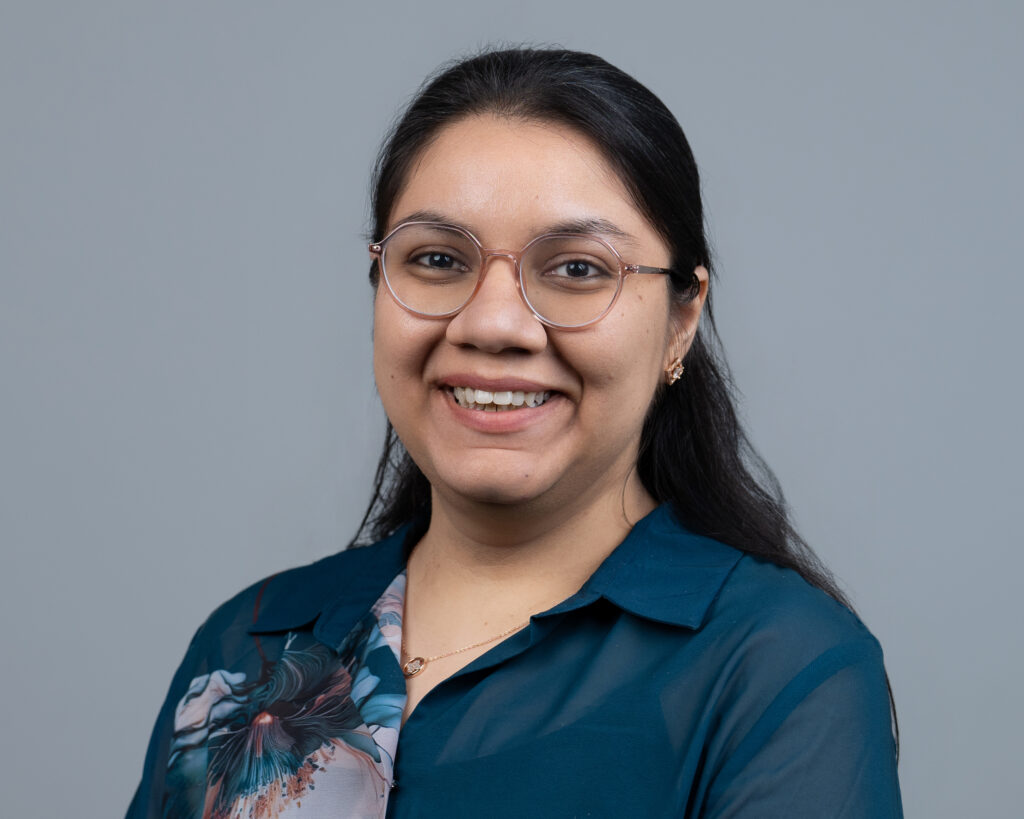


By Palkin Arora, Postdoctoral fellow, IIT Gandhinagar and India RISE Fellow 2026
I did not begin my journey in research with the intention of becoming a neuroscientist. I wanted to be a clinician. That was the plan I held onto: clear, structured, and meaningful. When I could not secure a clinical position, that certainty quietly gave way to uncertainty.
What followed was not a bold pivot, but a direction I had not consciously chosen.
I turned to biochemistry, telling myself that if I could not work directly with patients, I could at least stay close to the biology of disease. But very quickly, I found myself lost in it: pathways upon pathways, intricate but overwhelming. I remember sitting with pages of metabolic maps, thinking: this is important, but it feels distant, hard to connect to something human.
For a while, I carried that quiet doubt, that maybe I had taken a path that did not quite fit.
And then, one class changed everything.
It was a neurobiology lecture where my professor paused midway and shared an email he had received. It was from a neighbour of a patient living with amyotrophic lateral sclerosis, or ALS. She wrote about how the patient’s involuntary movements were misunderstood by the community and how people mocked what they did not understand. She wrote about visiting doctors, about leaving without answers. Almost as an act of hope, she began reaching out to researchers.
I do not remember the rest of that lecture.
I remember sitting there, struck by something I had never fully grasped before: when healthcare systems reach their limits, people turn to research. Not as an abstract pursuit, but as a possibility, sometimes the only one left.
Research no longer felt distant. It was not just about knowledge; it was about responsibility.
That moment shifted something fundamental in me.
Research no longer felt distant. It was not just about knowledge; it was about responsibility. With that shift, I moved towards neuroscience.
Finding the Brain-Body Connection
For my Master’s dissertation, I began studying microglia, the immune cells of the brain. The first time I saw them under the microscope, I remember pausing longer than necessary. They were not static structures; they seemed alive in a way I had not expected, constantly extending and retracting, quietly surveying their environment.
I remember thinking: these cells are always watching, always responding.
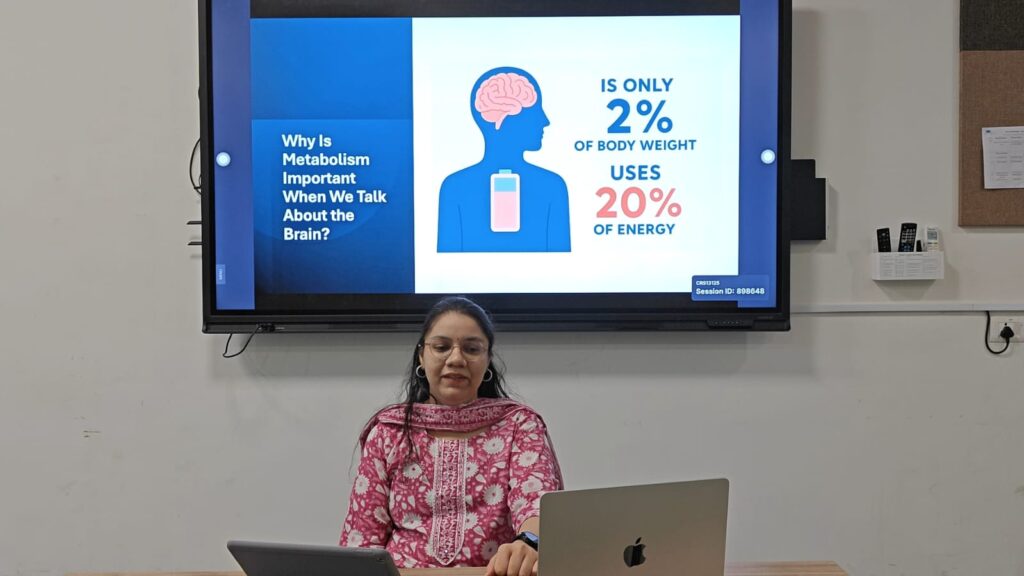
What fascinated me even more was what we began to observe: that inflammation in the body could activate these cells in the brain. The boundary I had once imagined between brain and body started to dissolve. The brain was not isolated; it was in constant conversation with the rest of the body.
That idea stayed with me.
Studying Injury, Disruption, and Recovery
I carried this idea into my PhD, where I studied traumatic brain injury, or TBI. Here, the questions became more complex. What happens when the brain is disrupted? How does that disruption extend beyond neural circuits?
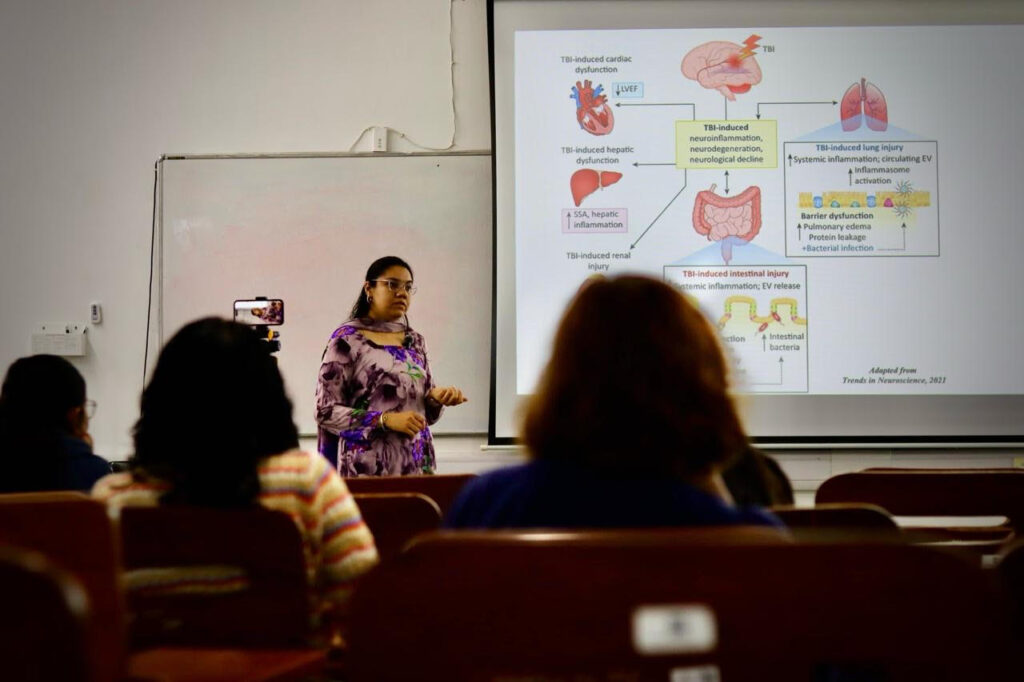
What I found was that injury does not remain contained. A blow to the brain can ripple through the body, altering immune responses, metabolism, and overall physiological balance.
The brain does not break alone; it takes the body with it.
This work showed me what breakdown looks like, not as a single event, but as a gradual loss of coherence across systems. But somewhere in the middle of studying how the brain breaks, I found myself drawn to a different question.
What does it mean for the brain to rebuild?
This curiosity led me towards understanding resilience, large-scale brain networks, and eventually, meditation. If injury represents disruption, then practices like meditation offer a window into regulation: how the brain can reorganise, stabilise, and adapt in intentional ways.
From disruption to regulation, from breakdown to rebuilding, the question remained the same, but the lens had shifted.
At its core, my work now explores how the brain interacts with the body, and how these interactions shape our experience of the world.
Navigating Research as an Early-Career Woman in STEMM
Alongside this intellectual journey, there has been another, less visible layer to my experience in research.
There were moments when progress felt uncertain, not because of a lack of effort, but because of delays, dependencies, and unclear timelines. Work that required acknowledgement would wait. Decisions would stretch out. And in those spaces, it was easy to begin questioning not just the system, but myself.
These are not always the challenges we are trained to anticipate.
They are subtle, often unspoken, yet deeply influential, especially for early-career researchers navigating complex institutional structures. For many women in STEMM, these experiences are not exceptions; they are patterns that shape how we move, persist, and sometimes hesitate within research spaces. Learning to navigate this has been its own form of training.
An Evolving Relationship With Research
My journey, in that sense, is still unfolding.
From wanting to treat patients, to understanding molecules, to studying the brain in states of injury and recovery, I have come to see research not as a fixed path, but as an evolving relationship between questions, systems, and lived experience.
And perhaps that is where I find myself now, not at a destination, but in a direction.
A curious neuroscience researcher, trying to understand the brain, not only in how it breaks, but in how it rebuilds, adapts, and continues.
Because sometimes, the most meaningful paths are not the ones we choose, but the ones that reshape how we choose to see.