
By Beth Romanski, Curriculum Director, India RISE and Senior Program Manager, Gupta-Klinsky India Institute
From the earliest stages of envisioning the India RISE Fellowship, I was inspired by the opportunity to help build a large-scale educational initiative with meaningful impact. The vision was clear: to create a transformative, accessible, and empowering learning experience for early-career women STEMM researchers in India. The challenge was to translate that vision into a curriculum that was rigorous, relevant, and responsive to researchers working across disciplines, institutions, and regions.
Building a Learning Journey
For me, curriculum design has always been more than the organization of content. It is the careful construction of a learning journey. A strong curriculum asks what learners should be able to do by the end of an experience, what support will help them get there, and how a program can honor diverse backgrounds while maintaining high academic and professional standards.
My approach began with listening. Over several months, our team reviewed insights from Indian institutions, industry partners, global STEMM programs, Johns Hopkins faculty, and women scientists at different stages of their careers. Most importantly, we listened closely to partners and prospective learners in India to ensure that what we were designing would make sense within their cultural, institutional, and professional contexts.
These conversations reinforced a simple truth: meaningful professional growth requires more than technical expertise. Researchers also need mentorship, confidence, leadership development, institutional navigation skills, and a supportive professional community.
This is especially true for early-career women researchers in Indian academic and research settings. Many are expected to excel in research while also carrying administrative, mentoring, or caregiving responsibilities. Others work in environments where access to senior mentors, international networks, or leadership training may be uneven. A curriculum designed for impact must recognize these realities and offer a learning experience that is both rigorous and practical. It must also create value beyond the fellowship year, giving fellows continued access to resources, networks, and skills they can return to as their careers evolve.
Three Pillars: Research, Leadership, and Mentorship
With this in mind, we designed the India RISE curriculum around three interconnected learning pillars: research, leadership, and mentorship. The research pathway supports fellows in strengthening advanced research and project management skills, including research ethics, proposal development, grant writing, scientific communication, stakeholder engagement, and translational research.
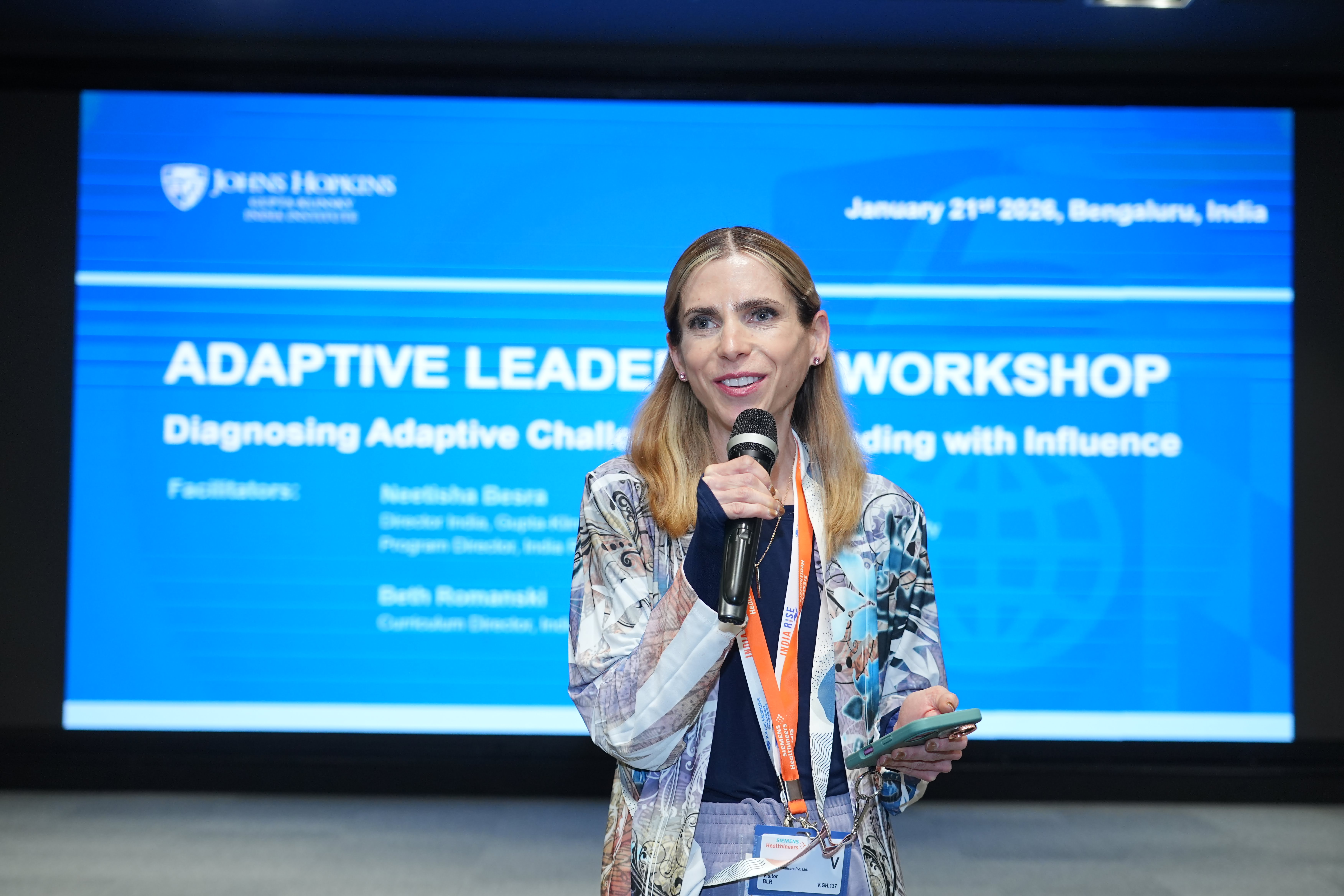
The leadership pillar helps fellows build self-awareness, confidence, adaptive leadership practices, and strategic career plans. The mentorship pillar places guidance and peer learning at the center of the fellowship, connecting fellows with research advisors, program mentors, peer mentors, and coaching support.
Each pathway is intentionally layered. Fellows are not simply receiving information. They are applying ideas to their own research trajectories, reflecting on their professional goals, and building a personalized roadmap for growth. One core tool is the Individual Development Plan, or IDP, which is tailored to each fellow and helps connect research ambitions with leadership development and mentorship needs.
The experiential Capstone Project also gives fellows a way to apply each stage of the researcher journey in real time, creating immediate value for their own career trajectories, their institutions, and India’s broader research ecosystem.
Designing for Outcomes and Access
The curriculum is grounded in evidence-based adult learning theory, including competency-based education and backward design. Each module begins with clear learning outcomes and works backward to identify the activities, assessments, and resources needed to support mastery. In this model, outcomes matter more than time spent on any one activity.
Accessibility was also a central priority. Having spent decades developing professional education, online learning, and micro-credential programs, I believe high-quality learning should meet learners where they are.
For India RISE, this meant designing a flexible, hybrid experience that combines self-paced learning on JHU’s online learning platform, highly interactive live virtual workshops, reflective exercises, peer discussions, mentorship sessions, coaching, and in-person convenings. These formats are designed to fit together, accommodate different learning preferences, and maximize live sessions for skills application and peer engagement.
This flexibility matters. India RISE fellows are researchers working in demanding institutional environments while balancing teaching, fieldwork, administrative duties, and personal commitments. A well-designed curriculum must respect that complexity while still creating momentum, shared progress, and honoring personal wellbeing. Our program competencies include resilient and adaptive leadership, and the curriculum supports fellows in building these skills for sustainable academic research careers. As motivation and incentive, fellows also have the opportunity to earn a Johns Hopkins verified micro-credential, helping them demonstrate their skills on CVs and digital profiles for career recognition and advancement.
Mentorship as a Skillset
My own experience with mentorship has shaped how I think about integrating it into the fellowship curriculum. Early in my career, a senior woman leader selected me as her mentee for a women’s leadership initiative. I had not yet built confidence in my professional path, but she saw potential in me before I fully saw it in myself. Since then, mentors, peers, supervisors, and male allies have helped me recognize my strengths and take the next step.
Those experiences taught me that mentorship is not only about advice. It is about developing a mentorship skillset: knowing how to seek guidance, build trusted relationships, support peers, and eventually pay that support forward.
India RISE embeds this through a triad mentorship model that includes dedicated India RISE Program Mentors, self-selected Technical Research Advisors, and both group and one-on-one mentoring formats. Together with peer engagement, coaching modules, and workshops, this model helps fellows grow not only as mentees, but also as future mentors within their own institutions.
Leading From Wherever You Are
Our approach to leadership development is also strengths-based. Through self-reflection, hands-on practice, and personalized coaching, fellows are encouraged to understand their values, voice, and vision. Tools such as strengths-based assessments help them identify how they lead, collaborate, and grow. The aim is to build self-awareness, efficacy, and agency, so fellows can lead from wherever they are.
Developing the India RISE curriculum has been challenging, creative, and deeply meaningful. It has renewed my passion for thinking differently about integrated learning experiences that combine cognitive outcomes, such as research and technical skills, with affective outcomes, such as confidence, resilience, collaboration, and leadership behaviors. At its heart, the curriculum is about lifelong learning. It is designed to help fellows build the habits, relationships, and mindset needed for empowering, sustainable careers.
The true measure of this curriculum is not completion, but continuation. How it lives on in the choices fellows make, the confidence they build, and the people they lift.
The India RISE Fellowship curriculum will ultimately come to life through the fellows themselves. As an instructional designer and educator, I can see the vision from start to finish, but what matters most is what learners do with it. My hope is that India RISE fellows will use this experience to strengthen their research, support one another, and expand what is possible for women’s scientific leadership in India.