

By Vamanie Perumal, Lead AI Researcher, AI4NetZero Group, IIT Madras and India RISE Fellow 2026
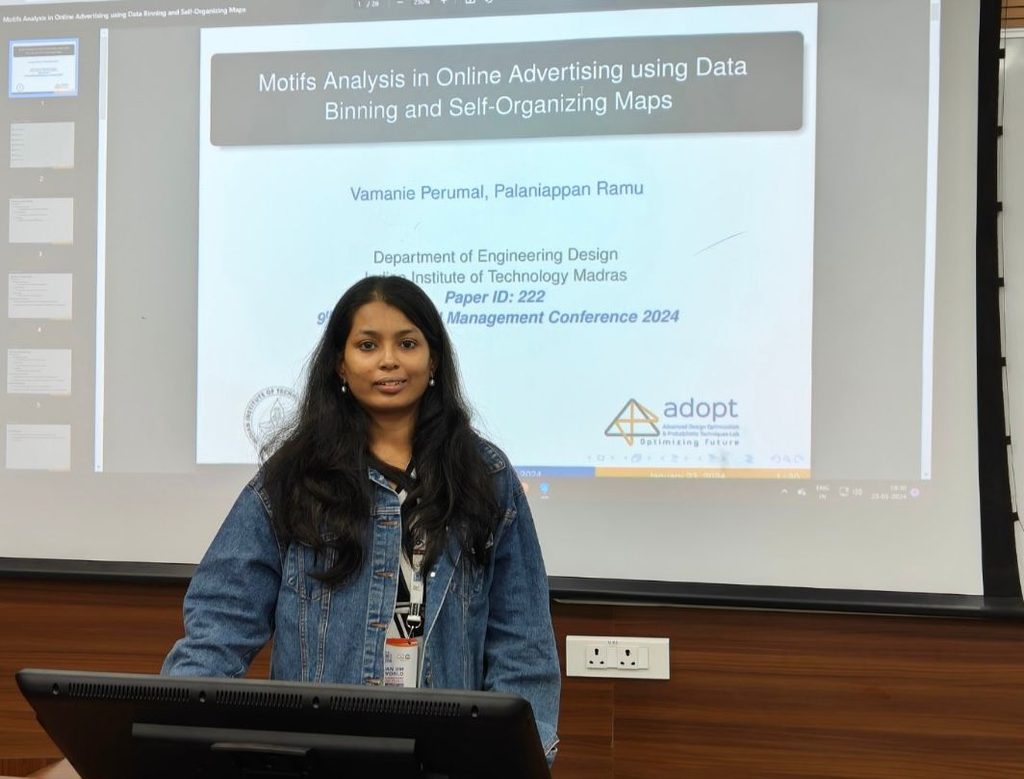
When I led a peer-led session for the India RISE cohort on using artificial intelligence in research, I began with two disclosures. First, I did not come from a computer science background. My bachelor’s and master’s degrees were in the sciences, and I pivoted to AI only during my PhD at IIT Madras. I therefore wanted to share a practitioner’s perspective on how a scientist or biologist can use AI in research.
Second, I used AI to help prepare the session. The notebook and parts of the presentation came from NotebookLM. I retained different slide styles because some outputs did not meet my requirements or contained inaccuracies. The result demonstrated a central point: AI-generated work still requires human review and editing.
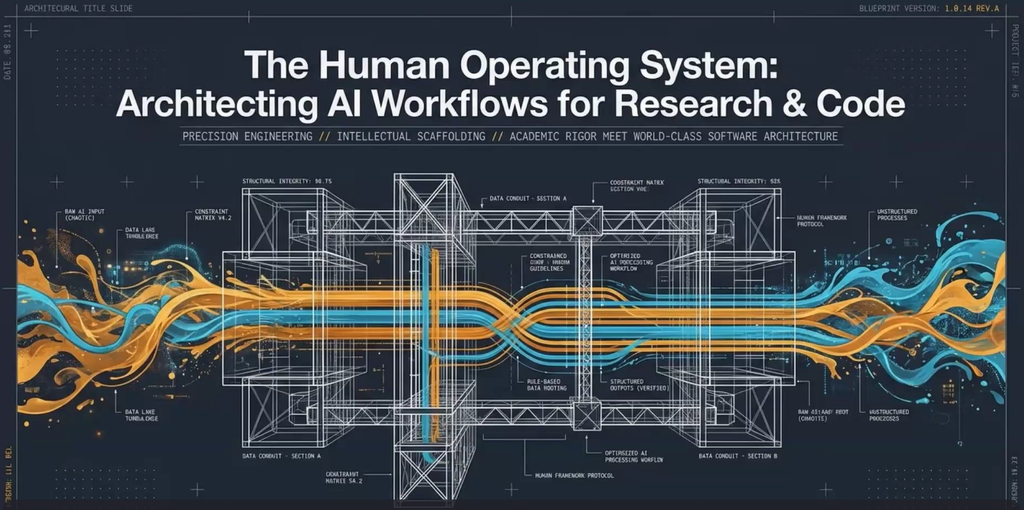
AI tools can initially feel overwhelming, and their capabilities keep evolving. Researchers do not need to use every platform, although it helps to understand what different tools can and cannot do. I do not use more than two or three tools for a single task. The useful question is: what exactly are you trying to achieve?
AI is only a tool, and the real master is the researcher and her domain expertise. It can generate information at a speed that is difficult for any individual to process, but speed does not make the information accurate.
AI is a fluency machine, not a truth engine. When someone begins using a large language model, its confident answers can appear convincing. With greater expertise, the user becomes better able to identify where the model is fabricating information or generating what I call “confident mess.” Human expertise and context are what make the use of AI effective.
Before using AI for a research task, I ask whether it can reasonably be completed manually. AI is most useful when a task becomes cumbersome or exceeds human scale. For example, I work with around one trillion data points on an everyday basis, which cannot be analysed manually. If I were working with only a thousand data points, however, a manual method might still be possible. Researchers should first judge whether AI is genuinely necessary.
I think of human-AI collaboration at four levels. A researcher may begin by asking a tool to explain a concept. She can then add the context in which she wants to apply it, ask the tool to criticise the proposed method and, finally, use it for an adversarial review by providing detailed information about the dataset, hypothesis, limitations and possible results.
During the session, I used principal component analysis, or PCA, for Raman spectroscopy as an example. Simply asking, “What is PCA?” is very different from asking whether PCA is appropriate for a particular dataset. A useful prompt would explain the researcher’s mathematical knowledge, the limitations of the data and the scientific questions she is trying to answer. It would ask the tool to act as a scientific reviewer, challenge the method and identify supporting literature. The researcher must then examine the response through her own subject knowledge.
AI can also support literature reviews. A good review usually begins with a seed paper, followed by backward snowballing to examine the work it cites and forward snowballing to identify later research that develops it. Tools such as Connected Papers, Elicit, Consensus, ResearchRabbit and NotebookLM can assist with different parts of this process.
I demonstrated them using a paper on predicting uranium in Punjab’s groundwater through machine learning. Because few studies had addressed this question, the exercise revealed the platforms’ limitations. One identified relevant prior work, another found a newer paper, and another returned no useful results. I therefore recommend comparing no more than two or three tools, checking a sample of their results and returning to the original papers.
Once papers have been collected, I use a three-pass approach, for summarising the papers. The first pass screens abstracts and conclusions. The second examines figures, tables, methods and findings. The third develops critical arguments and considers how the research might be extended. I created structured prompts for each stage and used NotebookLM to rank and synthesise the papers. This keeps the human method of reading at the centre instead of asking a tool to produce an entire review from uploaded articles.
The same principle applies to scientific writing. My preferred structure is the OCAR approach: opening, challenge, action and resolution. I also use academic-writing resources such as They Say/I Say to provide examples of how arguments, citations and diverging results can be presented. A clear structure and good examples produce more useful output than a general instruction to write a paper.
AI-assisted coding also requires safeguards. Models may generate long scripts, silently skip errors or repeatedly create files and functions that become difficult to manage. Researchers should write a detailed specification, divide the analysis into stages, define assumptions and thresholds, introduce checkpoints and maintain logs. When a failure occurs, it is better to identify the stage that failed than to ask AI to debug the entire repository. Most importantly, researchers must be able to explain the code they use. Expected results alone do not prove that the code is correct.
There are serious limitations to consider. AI can fabricate information, reproduce gender bias, create confidentiality risks and raise questions about ownership. Unpublished data and materials should not be uploaded casually to large language models. Excessive reliance on AI can also homogenise writing, dilute a researcher’s individual identity and contribute to de-skilling.
I once received a peer-review comment asking me to carry out an analysis that was not technically feasible. Because it did not make scientific sense, I used an AI-detection tool, which flagged the comment as AI-generated. That did not establish its source conclusively, but the experience reinforced the need to evaluate every recommendation through domain expertise.
My view is that we should retain the human element in our work so that it continues to represent our identity and thinking. If AI is used consciously, with verification and human judgement, it can multiply our skills. If it is used without scrutiny, our thinking can gradually weaken.
The tools will continue to change. What will not change is the researcher’s thinking process. We should use AI to improve our knowledge and reasoning so that, even as individual tools come and go, our contribution to scientific discovery remains the same.

India RISE Fellow 2026 and Lead AI Researcher, AI4NetZero Group, IIT Madras