

By Indrani Devi Sarma, India RISE Fellow 2026 and Senior Resident at All India Institute of Medical Sciences, Guwahati
“There is no gift equal to food and water, no sacred day equal to Dwadashi, no mantra greater than the Gayatri, and no deity greater than the mother.”
Chanakya Neeti
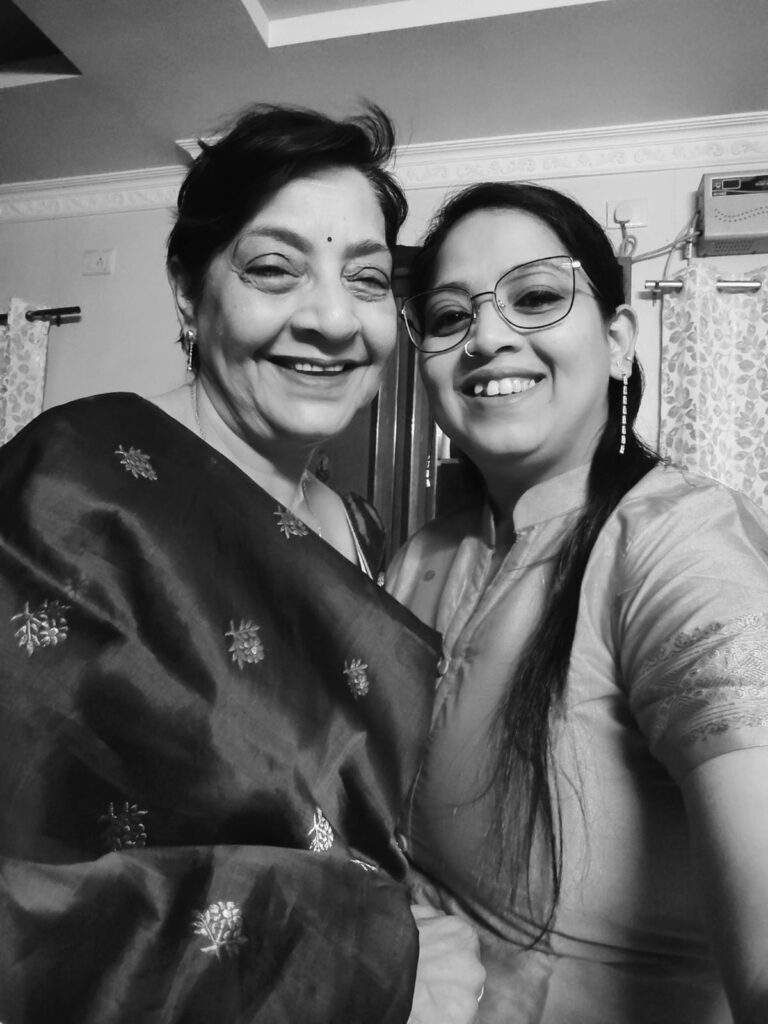
This line has stayed with me because my understanding of life was shaped by my mother. As the honorary principal of a women’s college, she dedicated her time to educating young women and helping them build more independent lives. She taught me to think about others before myself. I always wanted to become a researcher, but for a long time, I did not know how to turn my desire to find answers into work that could directly improve people’s lives.
My time at AIIMS Guwahati changed that. I moved from saying, “I wish I could do something about this,” to saying, “I will try my best to do something about it.” I realised that even if an attempt fails, it will teach you something and point you towards another path. As a popular Hindi line says, “Risk hai toh ishq hai,” which can be translated as, “Where there is risk, there is love.” If I never risk failure, I will never know the joy of succeeding.
My technical advisor and mentor, Dr. Dibyajyoti Saikia, strengthened this belief. He placed his trust in me, and together we started Vritiksha Tech Pvt. Ltd. to work on problems where technology could make a meaningful difference.
Sometimes, significant changes begin with small events. After a viral infection caused laryngeal palsy and affected my mentor’s ability to speak, we began discussing something most of us take for granted: the ability to communicate. Gestures used by people with speech impairments may not be understood by someone who has not been trained to interpret them, while existing communication tools may rely on cameras or internet access. We asked a simple question: how can someone communicate in a dark room, without a camera or a network connection?
That question led to Vritivani, an initiative designed to help people with speech impairments communicate through simple finger movements, without relying on cameras or the internet. When we spoke to members of the community, they confirmed that such a device was genuinely needed. Their response showed me that an idea arising from an ordinary conversation could change how someone experiences the world. Our first prototype has now reached the initial target we set for it, encouraging me to keep looking for other problems where a focused intervention could help.
One such problem was access to ferritin testing in resource-constrained settings. Ferritin levels help clinicians assess iron deficiency and guide decisions about whether a patient may need intravenous iron therapy, but the test can be costly or slow to obtain. Using machine-learning algorithms, I developed a tool that uses information from a complete blood count, a cheaper and routinely available test, to estimate ferritin levels. It is an early step, but with further validation, it could help identify patients who may need additional assessment and appropriate treatment.
Another idea emerged when I stepped in to teach a class. I noticed that many students were more comfortable with digital devices than textbooks, and longer concepts often struggled to hold their attention. Digital platforms were already part of how they encountered information, so I began asking how they might become a more purposeful part of the classroom. This led to iDIAL, a method that allows instructors to organise information into gamified learning modules. Students play as they learn, with knowledge becoming the key to progressing through the game.
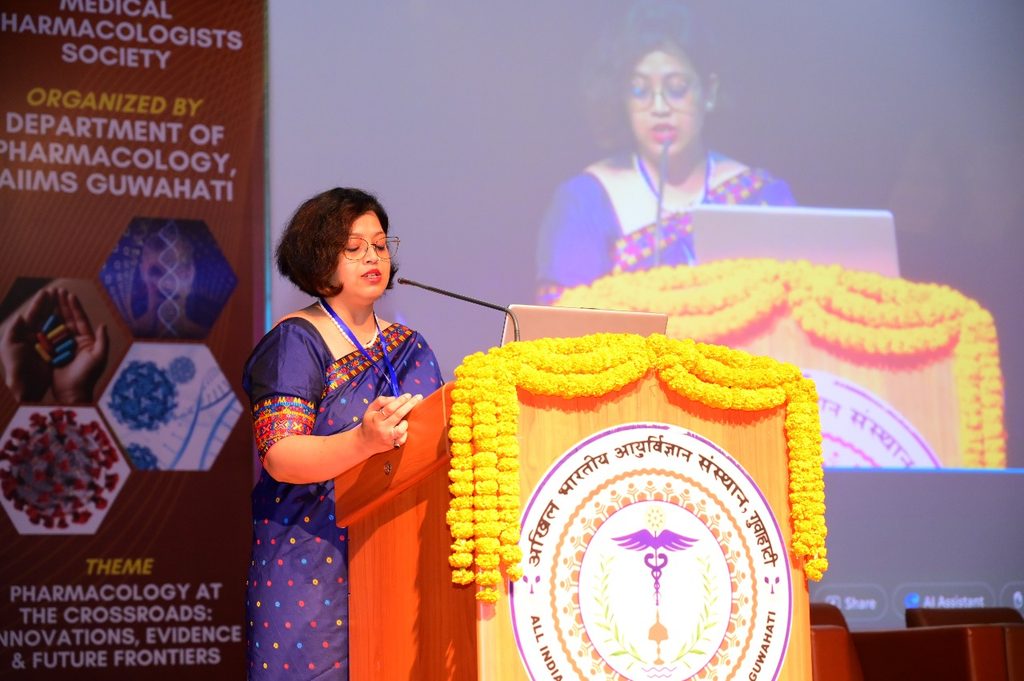
These experiences have taught me that entrepreneurship does not necessarily begin with a business plan, a company or even a fully formed idea. It begins with a problem that you cannot ignore. For me, it is the willingness to replace “I wish someone would do something about this” with “Perhaps I can try.” An idea may simply need to meet the right problem, time and context before it can make a difference.
This understanding has also made me think differently about women and entrepreneurship. Many women learn to solve problems, manage finances, use limited resources, generate income, take risks, make decisions and build networks from an early age. Yet these abilities, particularly when practised within the home or community, are not always recognised as forms of leadership or entrepreneurship.
Recognition matters. If we want more women to imagine themselves in positions of leadership, we must make the women who already occupy these positions visible. Titles such as principal, dean or principal investigator are gender-neutral, yet many people may still unconsciously picture a man. Even my own name has sometimes been changed from Indrani to Indraneel by people who do not know me, perhaps because the latter fits their mental image of someone in a particular position.
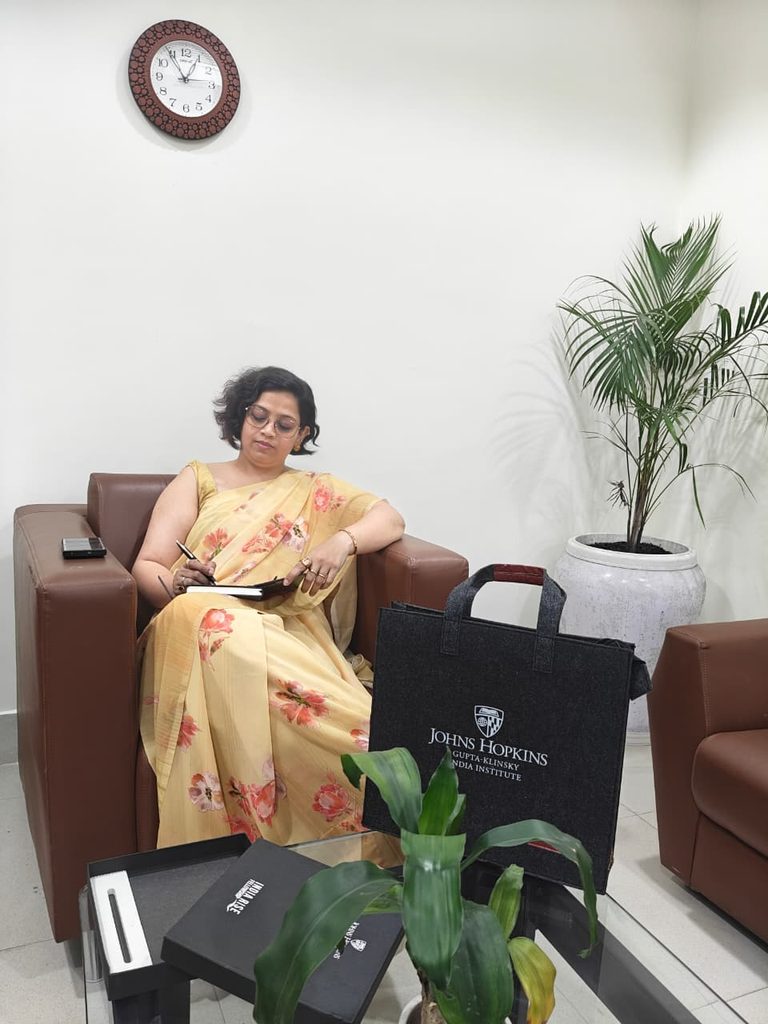
I have wondered whether explicitly feminine forms of institutional titles, such as “decaness” for a woman dean, could help challenge that default image. More broadly, how do we make women’s authority visible through the language and images around us? When a young woman repeatedly sees women as principals, deans, principal investigators, entrepreneurs and institutional leaders, she begins to understand that these paths are open to her too. Recognition does not only honour the woman who has already climbed the ladder. It can inspire another woman to begin climbing.
Perhaps this is what my mother taught me without ever calling it entrepreneurship. She educated young women, led an institution and helped others imagine fuller lives. She taught me my first lessons in leadership, not by explaining how to build a company, but by showing me how to notice a problem, take responsibility and try to improve someone else’s life.
For me, entrepreneurship begins with empathy. It begins when we see a problem, believe that we can act and find the courage to risk failure. Women have practised this form of entrepreneurship quietly for generations. We do not always need to become leaders; in many ways, we already are. Sometimes, we need to recognise it, name it and, most importantly, believe in it.
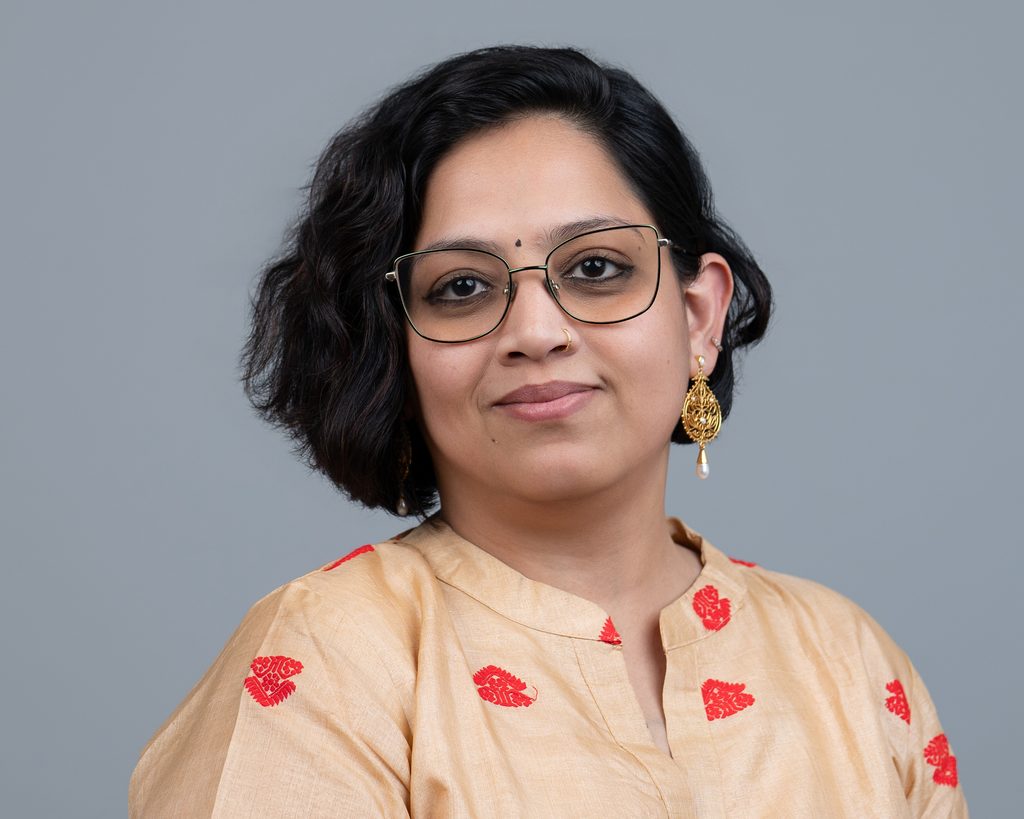
India RISE Fellow 2026 and Senior Resident, AIIMS Guwahati