

By Holly Wise and Inder Kumar, International Coaching Federation (ICF)-Certified Coaches and facilitators of optional one-on-one coaching sessions for India RISE Fellows
Ask someone to picture a leader, and a familiar figure often appears: charismatic, assertive, directive and visibly authoritative. It is the person at the front of the room, making decisions, setting the direction and ensuring tasks are completed. There is little question about who is in charge.
For early-career women building scientific careers, this image can become especially sharp. They are often mentoring students or juniors while navigating institutional expectations in environments where seniority and expertise are closely watched.
But there is a measurement problem with this image of leadership. When young scientists measure themselves only against this commanding figure, they can easily conclude that they are lacking something.
Through our coaching practice, we have observed that many capable people do not need more advice on how to adopt this style of leadership. Instead, we create the conditions for them to examine their own assumptions, recognise their strengths and make more intentional choices.
That approach felt particularly relevant to our work with emerging women leaders. Their challenge is often finding ways to exercise their strengths that feel authentic to who they are.
The conversations we have had with India RISE Fellows suggest they are not lacking leadership qualities. They are measuring themselves against a standard that does not necessarily align with their values. They do not always see themselves reflected in the image of leadership they have inherited.
Recognising the leadership already present
Across the coaching-skills workshop and one-on-one coaching conversations, we were struck by the words Fellows used to describe their own strengths: supportive, calm, reflective, people-centred, relationship-focused and approachable.
They described themselves as people who listen, bring out other people’s strengths, develop confidence rather than dependence, and maintain relationships while still holding people accountable.
Their reflections made clear that Fellows are already practising this style of leadership. In their academic and laboratory settings, they assess priorities, design professional learning opportunities and mentor juniors and students.
For some, there was a clear tension: how do I reconcile the standard image of a leader with my own values?
This dilemma is not about whether one leadership style is better than another. The question is whether Fellows can begin to recognise the leadership already present in their own way of working and become more deliberate about how they use it.
Assertive with care
Several Fellows reflected on what it would mean to be “assertive with care”.
That phrase describes something more demanding than simply appearing confident. It asks a leader to hold together qualities that are too often presented as opposites.
A leader can be:
Approachable and authoritative
Caring and firm
Reflective and decisive
Supportive and accountable
Relationship-focused and clear about boundaries
The ability to hold these qualities together is not a contradiction. It may be the work itself.
Being approachable does not require permissiveness. Being caring does not mean avoiding difficult conversations. Listening does not mean delaying every decision. Maintaining relationships does not mean sacrificing accountability.
The Fellows’ reflections suggest that these qualities can strengthen one another. Putting them into practice requires judgement: when to listen and when to act, when to support and when to challenge, when to remain flexible and when to hold a boundary. That judgement depends on understanding both the person and the context.
Space to define leadership for ourselves
Coaching gave Fellows a structured way to examine these choices. In the workshop, they distinguished coaching from mentoring and advising, then practised being present, asking open-ended questions, reflecting and exploring strengths.
Through demonstrations, role-play, peer conversations and group coaching, they experienced how a conversation changes when the first response is a question rather than an instruction or solution.
While mentorship offers perspective and advice from someone who has travelled further along a similar journey, coaching offers something different. It slows the conversation down, creating a non-judgemental space in which a person can articulate what matters, test inherited assumptions about authority and decide what action to take.
Perhaps most importantly, Fellows have the space to define leadership for themselves. Through this process, a more nuanced understanding of authority begins to take shape. The question “How do I become a better leader?” becomes more specific:
How can I be more intentional about being the kind of leader I already am?
Creating spaces where Fellows can recognise, refine and trust the leadership they are already beginning to practise may be one of the quiet strengths of the India RISE cohort.

Holly Wise
Holly Wise is an ICF-certified coach and leadership partner based in Bengaluru, India.
She helps high-performing professionals navigate career transitions and leadership challenges with structured coaching and practical strategies.
Holly brings together rigorous coach training, extensive cross-cultural experience, and years of leading teams and mentoring professionals across sectors.
She partners with accomplished professionals to cut through operational noise and lead with the clarity and confidence needed to create meaningful institutional impact.
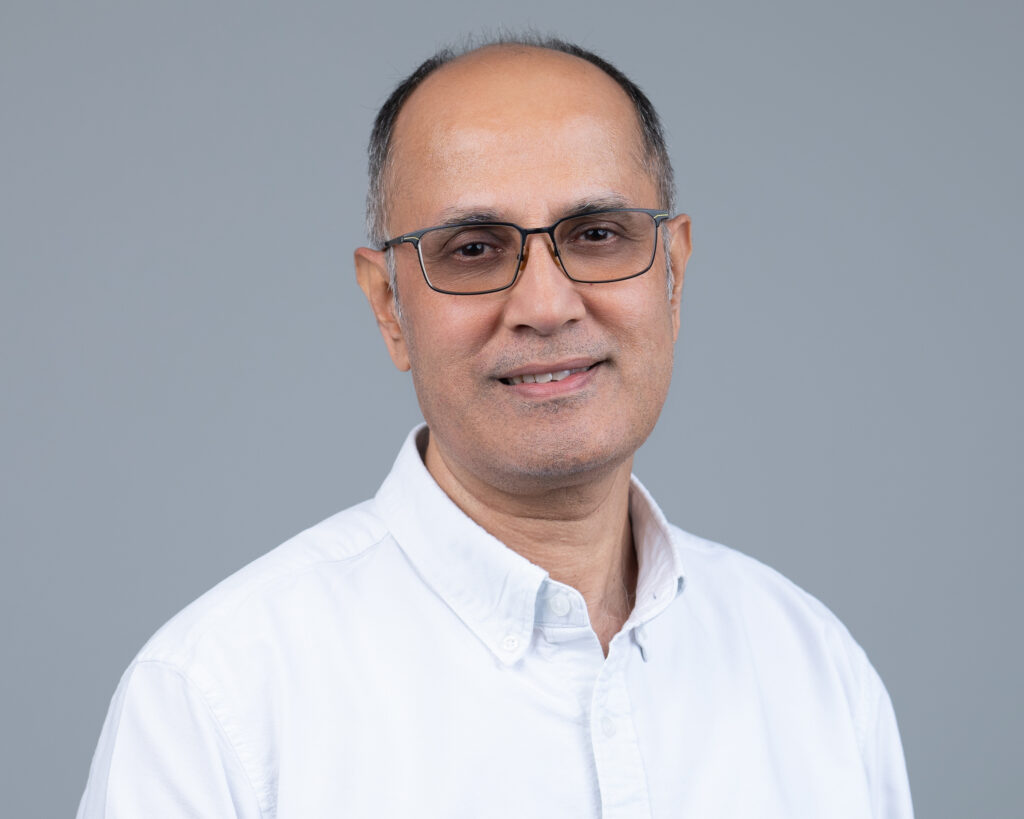
Inder Kumar
Inder Kumar is an ICF-certified leadership and career development coach.
He brings over two decades of experience building businesses, leading teams and mentoring professionals across technology, consulting and operations in Africa, Europe and India.
Today, he helps professionals, founders and entrepreneurs navigate transitions and uncertainty with greater clarity, confidence and self-direction.
Through India RISE, he helps Fellows apply coaching skills to peer mentoring conversations and take greater ownership of their growth.